
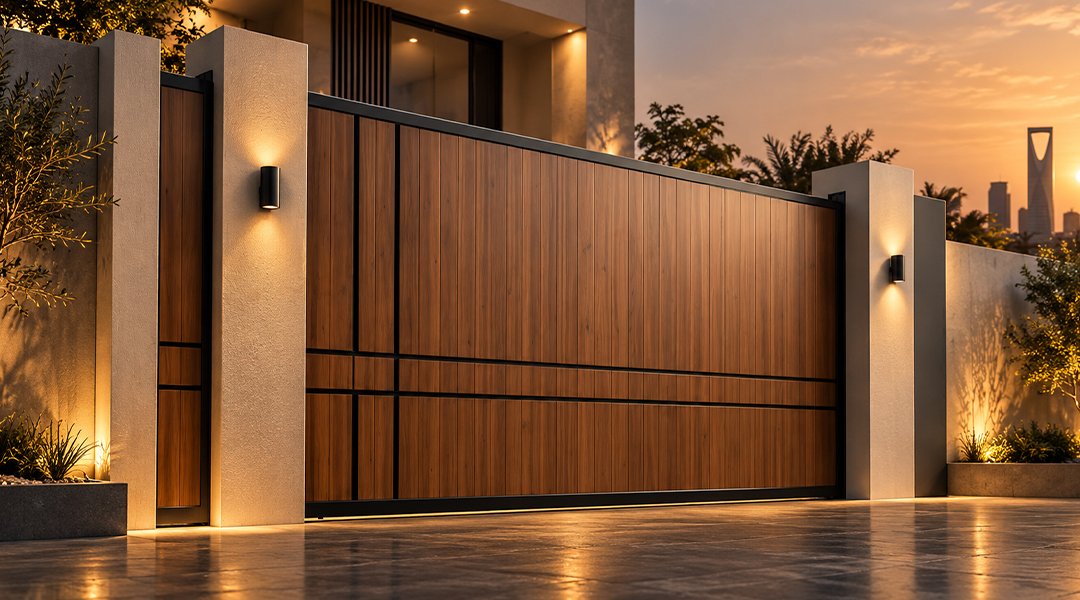
Your entrance door is something you choose once and use every day. A design might catch your eye in a photo, but the real test comes when you open it. Does it move smoothly? Does it give you the privacy you need? Does it suit the entrance space and the style of your home’s exterior?
When ordering custom iron doors in Riyadh, choosing a pattern and colour is only the beginning. The quality of the finished door depends on its structural design, accurate measurements, surface preparation, suitable locks and hinges, and careful installation that keeps everything aligned and working smoothly.
This guide explains the differences between popular designs, the factors that affect cost, and the details worth discussing before you approve a quote, helping you choose a door that suits your home, budget, and everyday needs.
When Is a Custom Iron Door Better Than a Ready-Made One?
A custom door makes sense when you need it to fit an existing opening, complement a particular architectural style, or meet requirements that a ready-made option cannot accommodate.
Custom fabrication is particularly useful for:
Non-standard dimensions: Wide or tall entrances, or openings with fixed side panels.
Greater privacy: A solid front or a combination of openings and backing panels suited to the entrance’s location.
A coordinated exterior: Matching the door’s lines and colours with boundary railings, handrails, and the driveway gate.
Site constraints: Nearby steps, a narrow passage, or floor levels that need to be taken into account.
Specific practical needs: Double doors, a wider clear opening, or provision for a compatible electric lock.
A ready-made door may be suitable if its dimensions and specifications meet your needs and it requires only minor site adjustments. A fair comparison should include the door, installation, and any necessary alterations, rather than the purchase price alone.
Iron Door Designs for Homes and Villas
Start by deciding what the door needs to do before choosing how it should look. A gate in a boundary wall has different requirements from a door that opens directly from the street into an air-conditioned interior. Pedestrian entrances also have different needs from vehicle gates.
Here is a quick comparison of the main options:
You can combine more than one style in a single door, as long as the design works well in daily use and complements the exterior.
Modern Iron Doors
Modern iron doors feature straight lines, balanced sections, and minimal ornamentation. They may have solid panels, horizontal or vertical slats, or a combination of iron and other materials.
This style works well with contemporary exteriors, but it calls for careful attention to detail. Simple designs make uneven gaps, welding defects, and paint imperfections easier to notice.
When choosing a modern door, review the width and spacing of the slats, the handle position, and the surrounding frame. Check that the design does not allow more visibility into the property than you want, especially if it faces a courtyard or family seating area.
Laser-Cut Iron Doors
Laser-cut iron doors allow for precise, varied patterns, from simple geometric shapes to intricate decorative designs. They are a good option if you want an entrance with a distinctive character and flexibility in how the open areas are arranged.
However, “laser-cut” describes the cutting method. It does not, on its own, determine the door’s strength or quality. The result also depends on the sheet thickness, structural framework, distribution of openings, and quality of assembly and finishing.
Before approving a pattern, discuss:
The size of the openings and how much they reveal of the space behind the door.
Whether a backing panel is needed, including its material, colour, and transparency.
How easy the pattern will be to clean, particularly around small details.
How the backing panel will be secured and whether it can be replaced later.
Metal World’s range includes laser-cut doors with Lexan backing panels, alongside other iron entrance door designs.
Decorative Ironwork Doors
Decorative ironwork doors give an entrance a strong visual presence, whether through traditional ornamentation or simpler arrangements suited to modern exteriors.
Choose decorative elements that suit the size of the door. Dense detailing can look crowded in a small entrance, while a larger entrance benefits from a balanced arrangement of solid elements and open space.
Also consider the finished door’s weight, how the decorative pieces are attached, and the quality of the joints and connections. If a backing panel is added for privacy, discuss how it will affect the weight, maintenance, and appearance from both sides.
Metal World’s decorative ironwork door with a Lexan backing panel offers an example of this style.
What Affects the Cost of Custom Iron Doors in Riyadh?
There is no single price that applies to every iron door. Two doors may look similar and have the same dimensions, yet differ in their framework, material thicknesses, finish, hardware, and installation requirements.
When comparing iron door prices in Riyadh, consider the following:
Is the Price Calculated per Square Metre or per Door?
The quote should clearly explain how the price is calculated. If it is based on square metres, ask whether the measurement refers to the wall opening or the outer dimensions of the frame, and what the rate includes.
For example, an opening measuring 1.50 metres wide by 2.40 metres high has an area of 3.60 square metres. This provides a starting point for calculations, but it is not enough to determine the cost without knowing the specifications.
For a fair comparison, send the same design, measurements, and specifications to each supplier. Then compare the total cost, including transport, installation, tax, and any additional work.
The Custom Door Process: Site Survey, Measurements, Fabrication, and Installation
Creating a custom door involves several connected stages. A detail left unresolved at the start can become an expensive change once fabrication is complete.
1. Define Your Requirements and Assess the Site
The process begins by confirming the entrance type, privacy requirements, number of door leaves, and opening direction. A site survey checks the condition of the walls, the available fixing points, and any obstacles that could affect the door’s movement.
2. Take Final Measurements
The opening should be measured at several points to check its alignment, allowing for the finished floor level and the thickness of surrounding finishes.
It is important to distinguish between the wall opening, the frame dimensions, and the clear passage width after installation. An opening may appear wide enough initially, but the frame and door leaf can reduce the space available to pass through.
3. Approve the Drawing and Specifications
Before fabrication begins, approve a drawing showing the dimensions, layout, opening direction, backing panel, handles, and colour. A reference photo helps communicate the idea, while the drawing confirms exactly what will be made.
4. Fabrication, Surface Preparation, and Painting
The components are cut and assembled according to the approved design. Welds and edges are then checked, and the surface is prepared for the agreed protective treatment and paint system.
5. Install the Door and Test Its Operation
Installation includes securing and aligning the frame, fitting the door leaves and hardware, and testing the opening, closing, and locking mechanisms.
At handover, open and close the door yourself several times. Check that it does not scrape against the floor, that the gaps are even, and that the lock works easily without having to lift the door leaf or push it hard.
Specifications to Discuss Before Approving a Quote
Clear specifications make it easier to understand what you are paying for and assess the finished result.
Framework and Material Thicknesses
Ask for the dimensions and wall thicknesses of the sections used in the frame and door leaves, along with the sheet metal thickness where applicable. Descriptions such as “heavy-duty” or “premium” are no substitute for written specifications. Extra weight alone does not guarantee better quality.
Rust Protection and Paint Finish
For exterior iron doors, discuss surface preparation and corrosion protection before choosing a colour. Ask whether the finish is suitable for sun exposure, how welds and edges will be treated, and how any scratches caused during transport or installation will be repaired.
Suitable Locks and Hinges
Hinges should be selected to suit the door leaf’s weight, dimensions, and frequency of use. Discuss the lock type, availability of spare parts, and maintenance requirements.
If you want a smart or electric lock, mention it before fabrication so that mounting dimensions, any required wiring, and the opening mechanism can be checked in advance.
Privacy and Insulation
A solid door can block the view into your property, but that does not automatically mean it provides thermal insulation, sound insulation, or protection against dust.
If these are priorities, ask about the construction of the door leaf, any internal insulation, seals, and the treatment of gaps and the threshold.
Scope of Work and Warranty
The quote should specify removal, supply, transport, installation, making good around the opening, and any required wiring. Ask for the warranty duration, coverage, and exclusions to be documented for fabrication, paintwork, and hardware.
Common Mistakes When Ordering Custom Iron Doors
Some problems will not show up in a design photo, but they can affect daily use for years:
Approving measurements before finishes are complete: Marble flooring and plasterwork can change the finished floor level or opening dimensions.
Choosing a design without checking the opening direction: The door leaf may hit steps or a wall, or obstruct a passage.
Comparing only the price per square metre: One quote may include painting, installation, and hardware, while another excludes them.
Adding excessive decoration or weight: Extra details require suitable framing, hinges, and fixings, and can increase maintenance needs.
Assuming a backing panel guarantees full privacy: Visibility depends on the material, transparency, and lighting behind it.
Focusing on paint colour while overlooking surface preparation: A good appearance at handover does not reveal the quality of the protection beneath the paint.
Relying on verbal agreements: Colour, thicknesses, lock type, and installation scope should all be documented.
Leaving operational checks until later: Any stiffness, scraping, or difficulty locking should be raised at handover.
It is also useful to agree on care instructions, including cleaning, lubricating moving parts according to the manufacturer’s recommendations, and treating scratches before they develop into larger problems.
How to Request a Quote from Metal World
To get a quote that reflects your project, prepare a clear description of the door instead of simply asking for a price per square metre.
Start by browsing Metal World’s door designs and product range, then send the following information using the contact options on its website:
The project location and neighbourhood in Riyadh.
The number of doors and whether they are pedestrian entrances or vehicle gates.
The approximate width and height of each opening.
Photos of the site from inside and outside.
A reference image or a description of your preferred style.
The level of privacy required, plus your preferred colour or backing panel if already chosen.
The project stage: under construction, fully finished, or replacing an existing door.
Your target completion date and any special locking or operating requirements.
Frequently Asked Questions
Does the Quote Include Painting, Installation, and Hardware?
That depends on what is listed in the quote. Ask for surface preparation, rust protection, painting, locks, hinges, handles, transport, and installation to be clearly specified. Also check whether tax, removal of the old door, and repairs to the wall or floor around the frame are included.
What Information Is Needed to Estimate the Cost and Lead Time?
The supplier will need the location, approximate dimensions, number of doors, photos of the openings, preferred design, backing panel and finish, hardware requirements, and details of site readiness.
The lead time can be confirmed after reviewing these details, material availability, and the fabrication and installation schedule. It is best to include an agreed delivery date in the contract.
What Is the Best Thickness for an Exterior Iron Door?
There is no single thickness that suits every door. The right choice depends on the door’s dimensions, structural design, reinforcement layout, leaf weight, and fixing method. Ask for a complete set of specifications rather than judging the door by sheet thickness alone.
Do Laser-Cut Iron Doors Provide Privacy?
Privacy depends on the size and arrangement of the openings, whether there is a backing panel, and how transparent it is. If privacy is a priority, ask to see a backing panel sample or a similar finished door, and discuss how indoor lighting at night may affect visibility.
Does an Exterior Iron Door Need Maintenance?
Yes. It needs periodic inspection, cleaning, and care suited to its finish, hardware, and exposure conditions. Watch for scratches, rust spots, wear in the hinges and lock, and changes in how smoothly it moves. Follow the maintenance instructions supplied with the door.
Choosing the right door starts with a design you like and depends on clear specifications and careful workmanship. If you are planning to order custom iron doors in Riyadh, send your measurements and entrance photos to Metal World and request a quote covering everything from the framework and finish to the hardware and installation.