Stay updated with the latest news, announcements, and developments at Metal World Co. Ltd.
Latest News & Blogs
Discover insights, project updates, and corporate announcements.
Articles
—Admin
Modern Wooden Doors: Latest Designs & Buying Guide
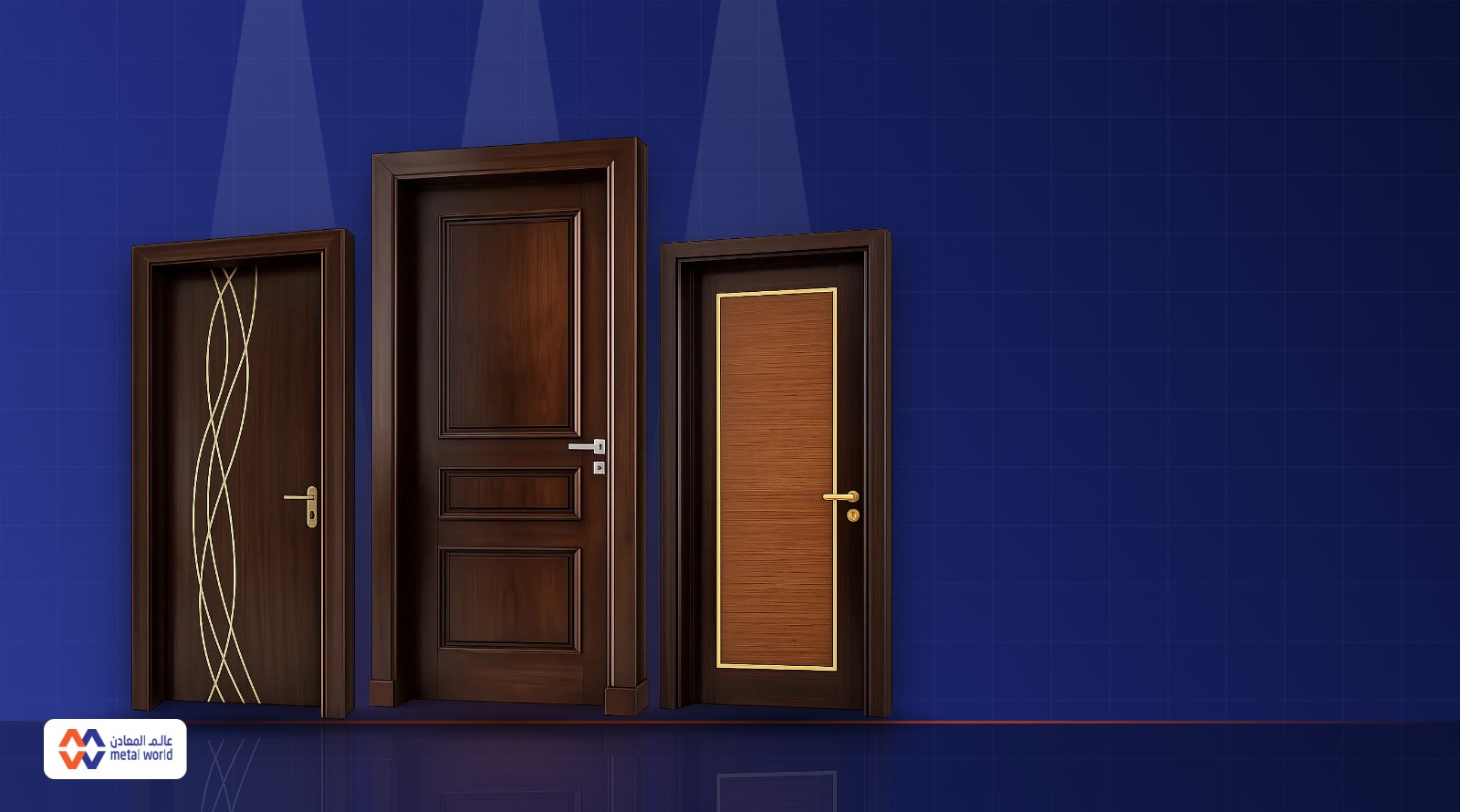
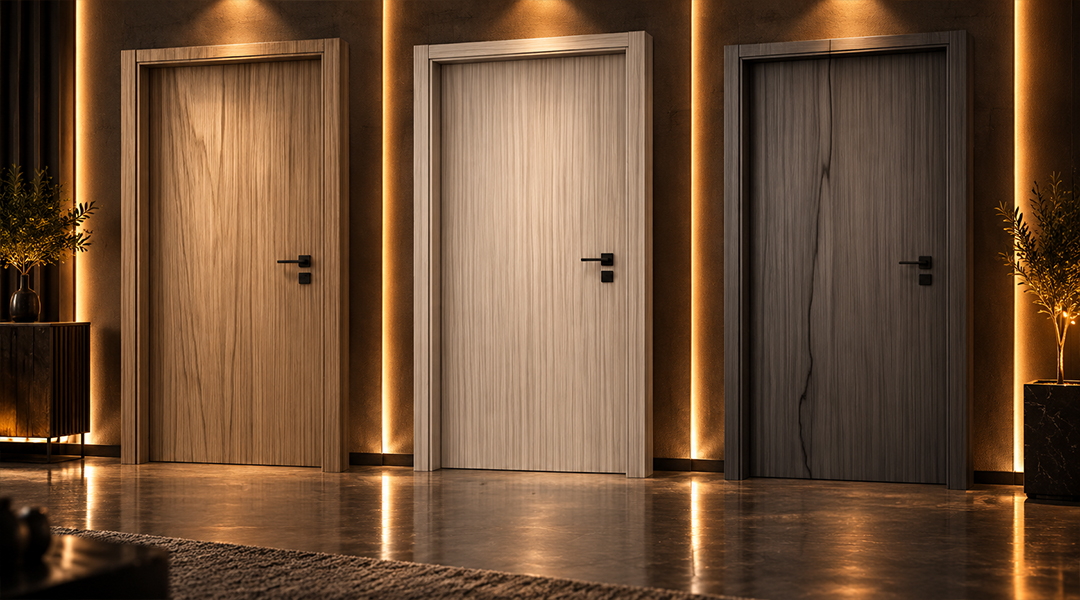
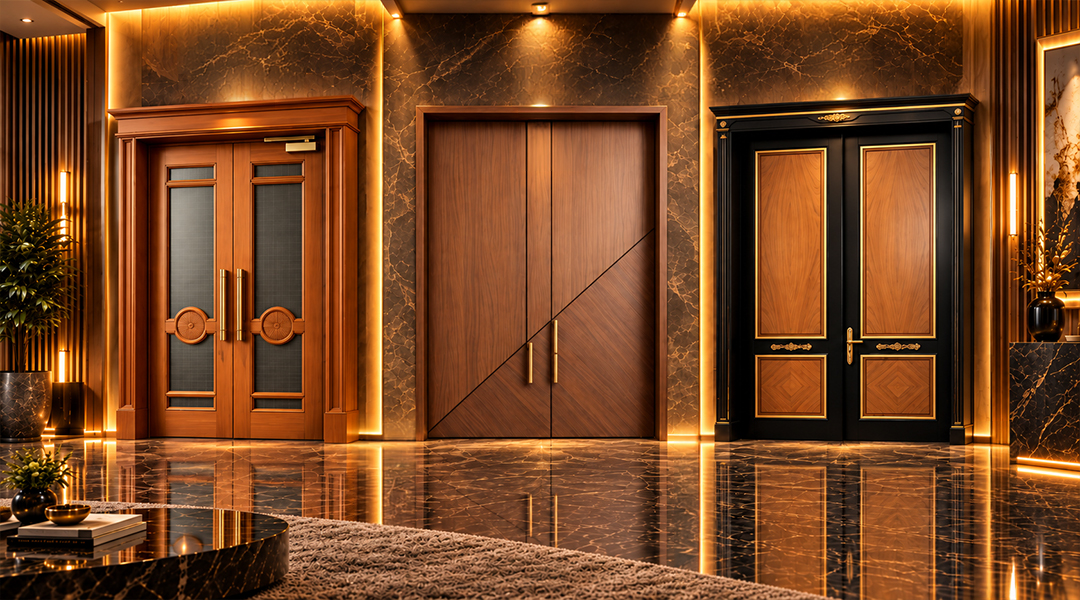
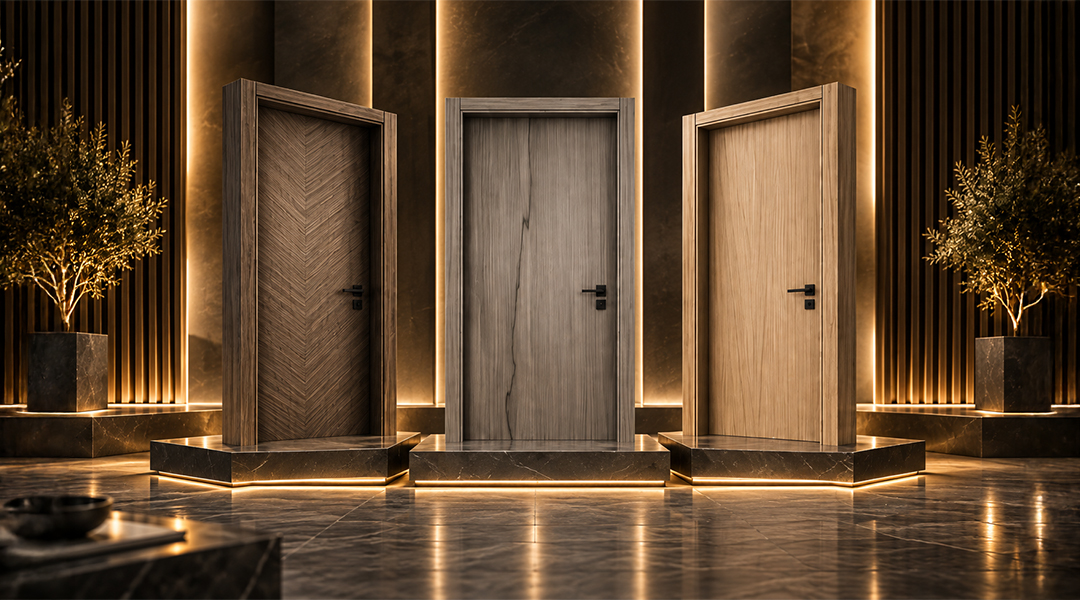
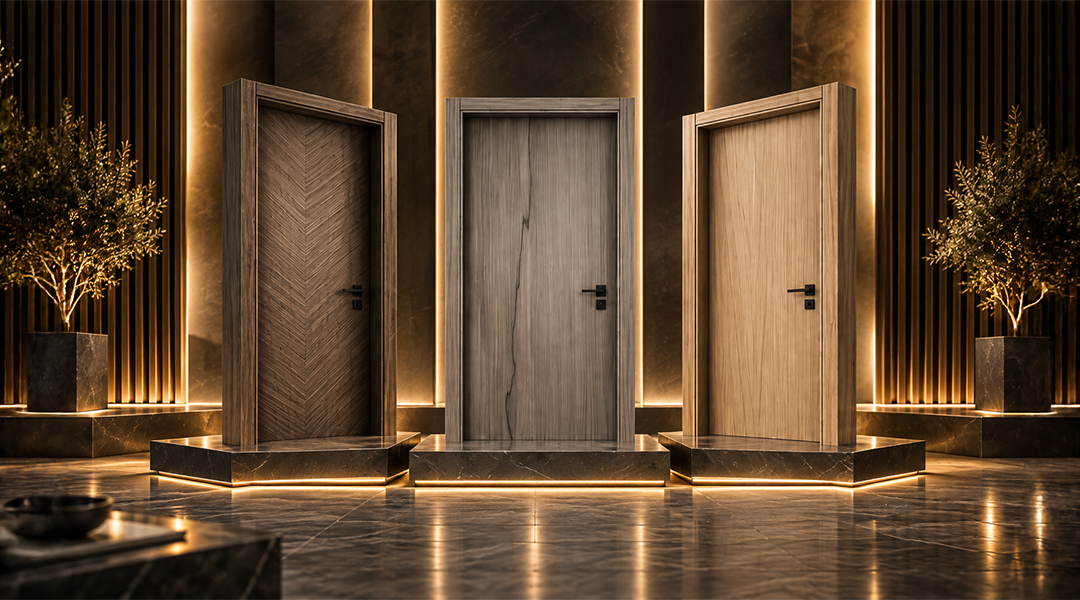
Modern wooden doors have become the first choice for most villa and apartment owners in Saudi Arabia. They combine the natural warmth of wood with the clean simplicity that contemporary interiors call for. A door is no longer just a divider between two rooms; it is a design element that appears in every corner of the home and shapes how the whole space feels. In this guide from Metal World , we walk through the latest modern wooden door designs, the most popular colors, the differences between materials, and how to choose the right door for each space before you request a quote. What Are Modern Wooden Doors? A modern door relies on straight lines and clean surfaces instead of heavy carving and ornament. It features simple divisions or a completely flat surface, calm colors, and carefully chosen details such as metal inlays or slim handles. The result is a door that looks luxurious without being excessive, and that pairs easily with marble, hidden lighting and contemporary furniture. Unlike classic doors that demand attention, a modern door blends into the interior design and completes it, which is why it has become so common in new residential projects. Latest Modern Wooden Door Designs in 2026 1. The Plain Flat Door A completely smooth surface with no divisions. It is ideal for minimalist interiors and long corridors that need a unified look, and can be finished in natural wood veneer or a matte color. See our flat interior wooden door models. 2. The Door with a Gold or Black Strip A slim metal strip on the door surface gives it an upscale, hotel-style character. Gold suits majlis rooms and private suites, while matte black suits industrial and contemporary interiors. Explore the interior wooden door with gold decor . 3. The Door with Artistic Metal Lines Curved or geometric lines inlaid in the wood turn the door into a piece of art. It is a distinctive choice for suite entrances and guest rooms. 4. The Modern Door with Simple Panels Light horizontal or vertical divisions add depth without losing simplicity, which suits homes that combine a contemporary style with a classic touch. Browse the modern interior wooden door . 5. The Hidden (Flush) Door A door installed flush with the wall and painted or clad to match it, so it almost disappears. It is perfect where you want a continuous wall without visual interruption. Most Popular Colors for Modern Wooden Doors White and off-white: visually enlarge the space and suit small rooms and corridors. Warm grey (greige): a contemporary neutral that works with marble and light floors. Walnut and dark brown: add warmth and luxury, and stand out against light floors. Natural oak: gives a calm feeling close to nature. Matte black: bold and elegant, ideal for home offices and industrial interiors. A simple rule: with light floors, a dark door creates a beautiful contrast. With dark floors, a light door brings balance and brightness. Modern Wooden Door Materials: Which Is Best? Solid natural wood: the most luxurious, durable and sound-insulating option, suited to main doors and majlis rooms. Engineered wood with natural veneer: the look of real wood with better stability against temperature changes, at a lower cost. WPC doors: moisture-resistant and easy to maintain, the practical choice for bathrooms and kitchens. Discover our flat WPC doors . For a detailed comparison, read our guide on WPC doors vs natural wood doors , or learn about the best types of wooden doors . How to Choose the Right Modern Wooden Door Define the door's location and use: a bedroom door needs sound insulation, a bathroom door needs moisture resistance, and a majlis door needs a stronger presence. Match the color to floors and walls: never choose the door in isolation from the rest of the design. Check material quality: ask about the door core, its thickness and the type of veneer or paint. Pay attention to handles and hardware: the handle is part of the design; choose from our door accessories . Insist on accurate sizing and installation: precise fitting prevents friction, gaps and noise over time. Where to Use Modern Wooden Doors at Home Bedrooms: flat or simple-panel doors in calm colors. Majlis and reception rooms: doors with gold strips, or wider and taller proportions. Corridors: one unified design and color for all doors creates a comfortable visual flow. Home offices: matte black, or wood with frosted glass. Bathrooms and kitchens: WPC doors with a modern wood look. Why Choose Modern Wooden Doors from Metal World? Since 1994, Metal World has designed and manufactured doors and facades in Saudi Arabia, offering interior doors with custom sizes and finishes for every project: Made to your required size, color and design. A range of materials including natural wood, veneer and WPC. Full coordination between doors, hardware and the rest of the interior. End-to-end service from consultation and measuring to installation. Send us your door sizes and photos of the space through our contact page , and our team will help you choose the right design and prepare a tailored quote. FAQ About Modern Wooden Doors What are the best colors for modern wooden doors? White, warm grey, walnut and natural oak are the most requested. The best choice depends on your floor and wall colors and the size of the space. Are modern wooden doors suitable for villas? Yes. They work very well for bedrooms, majlis rooms and corridors in villas, and can be made wider and taller to suit large spaces. What is the difference between modern and classic doors? Modern doors rely on straight lines and simple surfaces, while classic doors rely on carving, ornament and raised panels. Can a modern wooden door be made to a custom size? Yes. The door can be manufactured in the size, color and finish that suit your space.
Best Types of Wooden Doors: Complete Guide to Materials and Designs
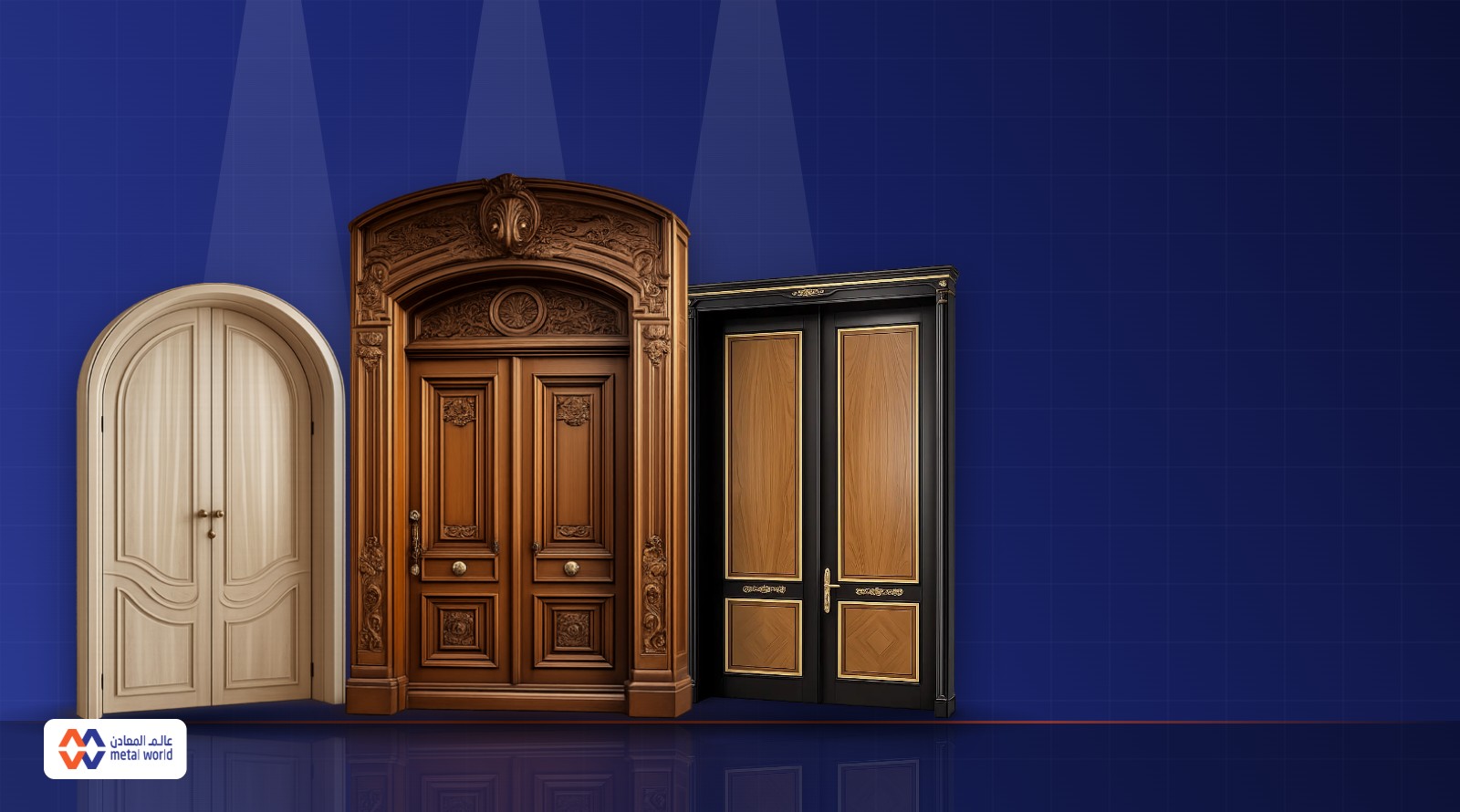
When you search for the best types of wooden doors , you will find many options that differ in material, design, price and where they can be used. The right wooden door for a villa entrance is not the same as the right one for a bedroom or a bathroom, and the wrong choice can mean cracking, swelling or constant maintenance after just a few years. In this complete guide from Metal World , we explain the types of wooden doors by material, by design and by installation location, and compare them clearly so you can choose a door that lasts and suits the Saudi climate. 1. Types of Wooden Doors by Material Solid Natural Wood Doors Made from solid natural timber, these are the most luxurious, durable and best at insulating sound and heat. Popular species include teak, beech, oak, walnut and mahogany. They can be carved, engraved and refinished several times, which makes them ideal for main entrances and majlis rooms. See our natural wood exterior door models. African Teak Wood Doors Teak is one of the strongest woods and among the most resistant to heat, moisture and insects thanks to its natural oils, making it one of the best choices for exterior doors in hot climates. Its warm color and visible grain give the door a luxurious look that improves with age. Browse our African teak wood doors . Swedish Wood Doors A relatively lightweight, dimensionally stable wood that is easy to paint and finish. It is very well suited to interior doors in bedrooms and corridors, at a lower cost than heavy hardwoods. View the Swedish wood interior door . Engineered Wood Doors (MDF and HDF) with Natural Veneer A core of compressed wood boards covered with natural wood veneer or laminate. They offer the look of real wood with better stability against expansion and shrinkage and a lower price, but they handle direct moisture less well and are less suitable for deep carving. WPC Doors (Wood-Plastic Composite) A composite of wood fibers and polymer that resists water, moisture and termites and needs no periodic painting. It is the best fit for bathrooms, kitchens and humid areas. Discover our flat WPC doors , and read our detailed comparison of WPC doors vs natural wood doors . Quick Comparison of Wooden Door Materials Most luxurious and durable: solid natural wood and teak. Best for exterior doors: African teak and treated natural wood. Best for interior rooms on a mid-range budget: Swedish wood or engineered wood with natural veneer. Best for bathrooms and kitchens: WPC doors. Easiest to maintain: WPC, followed by engineered wood. 2. Types of Wooden Doors by Design Modern doors: straight lines and clean surfaces for contemporary interiors. Read our guide to modern wooden doors . Classic doors: raised panels and a grand presence for majlis rooms and large villas. See the classic interior wooden door . Flat doors: a completely smooth surface for minimalist interiors. See the flat wooden door . Carved doors: engravings and details that give the door its own character. See the carved wooden door . Doors with gold decor: a luxurious touch for majlis and reception rooms. See the wooden door with gold decor . 3. Types of Wooden Doors by Location Exterior Wooden Doors These face sun, dust and high temperatures, so they need hardwood such as teak, weather-resistant treatment and coatings, and greater thickness. Browse our exterior doors . Interior Wooden Doors Here the priorities are design, sound insulation and harmony with the interior, and you can choose between natural, Swedish or engineered wood depending on your budget. Browse our interior doors , and for the differences in detail read interior vs exterior doors . How to Choose the Best Type of Wooden Door Define the location: exterior, interior or a humid area. Choose the material by use: teak outside, natural or Swedish wood inside, and WPC for bathrooms. Check thickness and weight: a heavier door insulates sound better and feels higher quality. Pick a design that matches your interior: keep one style for all doors along the same corridor. Do not neglect hardware and installation: hinges, handles and precise fitting determine the door's lifespan. If you are fitting out a whole villa, our guide to the best doors for villas may also help. Why Metal World for Wooden Doors? Since 1994, Metal World has designed and manufactured doors in Saudi Arabia, offering a wide range of African teak, Swedish wood, natural wood and WPC doors, with custom sizes and finishes and full service from measuring to installation. Send us your door sizes through our contact page , and our team will help you choose the best wood type and design for your project with a tailored quote. FAQ About the Best Types of Wooden Doors What is the best wood for doors? For exterior doors, teak and solid natural wood are the best because they withstand heat and moisture. For interior doors, natural and Swedish wood are among the best choices for beauty and stability. What is the best wooden door for a bathroom? WPC doors are the best for bathrooms because they resist water and moisture and do not swell or crack over time. Are natural wood doors suitable for the Saudi climate? Yes, as long as you choose a hardwood and treat it with heat- and UV-resistant coatings, especially for exterior doors. What is the difference between natural and engineered wood doors? Natural wood is more durable and luxurious and can be carved and refinished, while engineered wood is lighter, cheaper and more dimensionally stable but less tolerant of moisture.
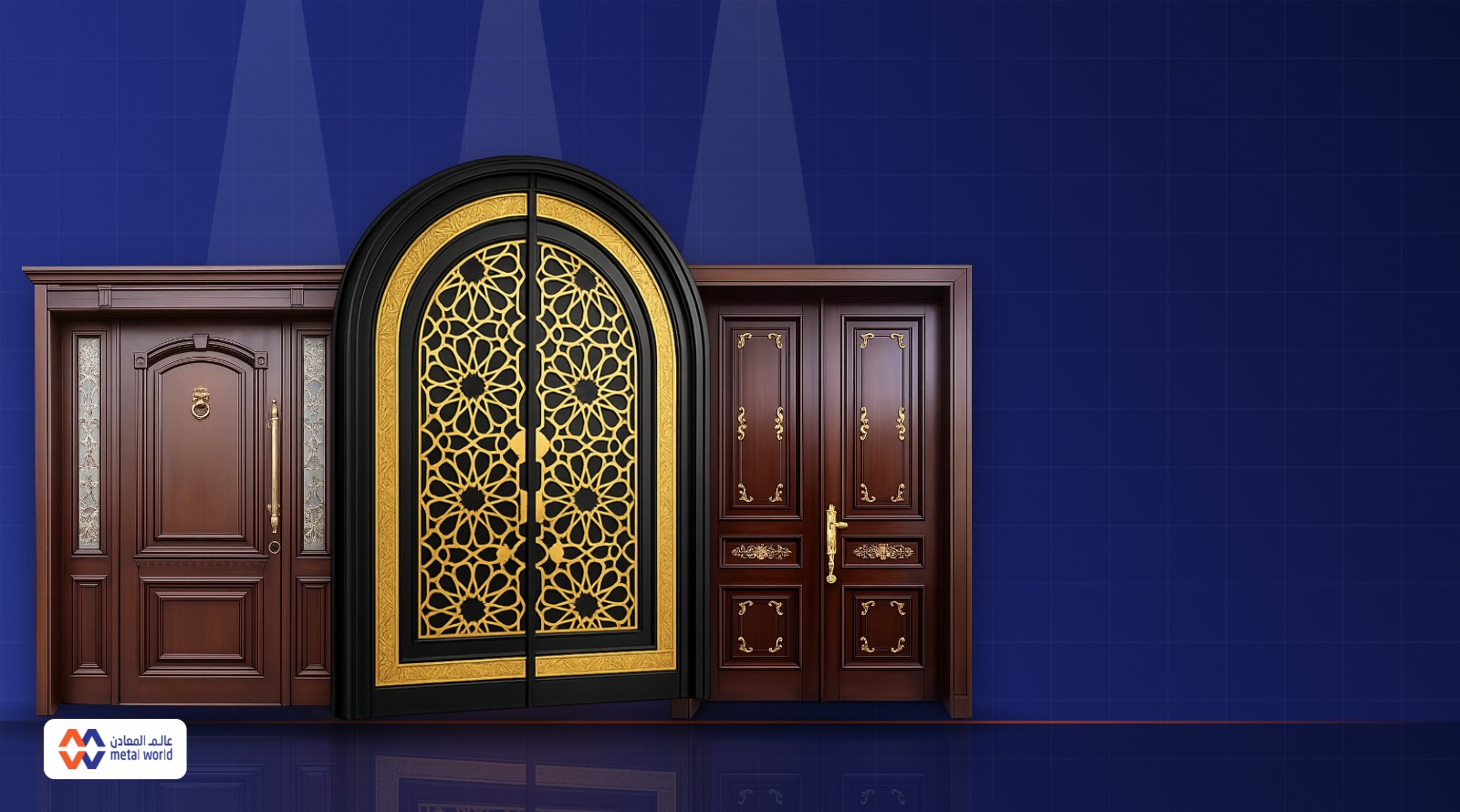
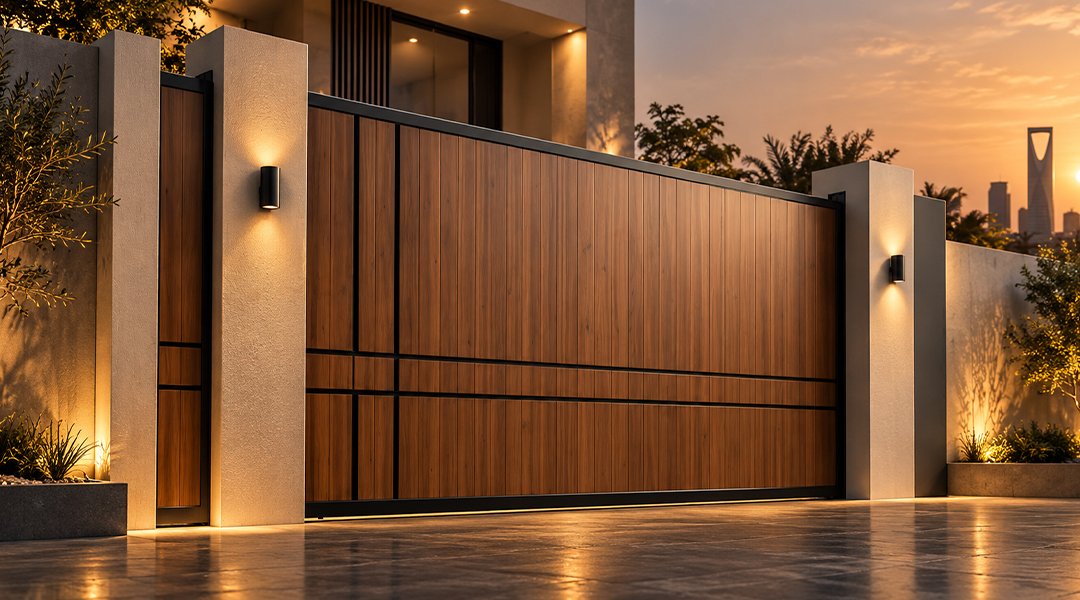
The entrance is the first thing a guest sees and the last thing they leave behind, which is why villa entrance doors are among the most important design and finishing decisions. The main door does not only reflect the owners' taste; it is responsible for security, insulation and resisting sun and dust every day for many years. In this guide from Metal World , we present the most popular types of villa entrance doors, their latest designs, and the specifications to ask about before production, so you can choose an entrance that combines luxury and durability and suits your villa's facade. What Makes a Villa Entrance Door Different? The main entrance door differs from interior doors in almost every way: Larger sizes: usually double-leaf or one-and-a-half leaf, with heights of 3 meters or more in grand entrances. Higher security: double steel sheets, a strong frame and multi-point locks. Weather resistance: summer heat, direct sunlight, dust and humidity. Architectural presence: it must integrate with the stone, marble or cladding of the facade. Most Popular Types of Villa Entrance Doors 1. Iron Villa Entrance Doors Iron is the strongest and most widespread choice for villa and palace entrances in Saudi Arabia because it combines high security with almost unlimited design freedom: laser patterns, brass, gold inlays or clean modern lines. With modern heat-resistant coatings, it withstands the sun for many years without losing its color. Standout designs include the double-sheet iron door with laser and brass details , the luxury double-sheet iron door and the modern iron door with a 50×100 frame . To learn more about custom work, read our guide to custom iron doors in Riyadh . 2. Wooden Villa Entrance Doors Wood gives the entrance unmistakable warmth and classic luxury, especially with hand carving and gold details. An exterior door, however, needs hardwood such as teak with UV-resistant treatment and coatings, and the entrance should ideally be partly covered by a canopy or architectural overhang. Browse the classic exterior wooden door , the exterior wooden door with gold decor and the natural wood exterior door . If you are comparing wood types, read our guide to the best types of wooden doors . 3. Entrance Doors with Glass Sidelights A main door framed by side or top glass panels (sidelights) lets natural light into the inner entrance and gives the facade an open, contemporary look. The glass is usually tempered or double-glazed and frosted to maintain privacy. See the modern exterior wooden door . 4. Iron Doors with Cladding or Wood Combining a strong iron structure with wood or cladding gives you the security of iron and the warmth of wood together, a growing trend in modern villas. See the luxury iron door with a 40×80 frame . Exterior Gates: The First Impression Before the Door In many villas, the entrance begins at the outer gate in the boundary wall before you reach the main door. Matching the gate design with the entrance door gives the villa a unified identity. Distinctive options include: A luxury wrought iron gate with gold details and side pillars. Laser-cut doors with a polycarbonate backing for full privacy with a modern design. A wrought iron door with brass decor for palaces and large villas. Browse all exterior doors and luxury entrances . Latest Villa Entrance Door Designs in 2026 Arched entrances: doors with an arched top and laser-cut Islamic geometric patterns that blend heritage and modernity. Tall pivot entrances: a door on a central pivot with generous height that gives the entrance a striking architectural character. Black with gold: a luxurious classic combination that remains the most requested in Saudi villas. Simple modern lines: a clean surface with a long metal pull handle for villas with contemporary facades. Integration with the facade: a door that harmonizes with the architectural facades in color and material. How to Choose the Right Villa Entrance Door Define the size and height precisely: a wide, tall entrance gives the villa prestige, but it must suit the scale of the facade. Ask about the security level: steel sheet thickness, frame type and number of locking points. Choose a climate-proof material: iron with heat-resistant paint, or treated hardwood for exposed entrances. Coordinate the door with the facade: its color and details should complement the stone, marble or cladding. Do not neglect insulation: thermal and acoustic insulation keeps the entrance cool and quiet. Choose hardware carefully: handles and locks are part of the design; pick them from our door accessories . If you are choosing doors for the whole villa and not only the entrance, read our guide to the best doors for villas: iron, wood or WPC . Why Choose Metal World for Your Villa Entrance? Since 1994, Metal World has designed and built doors and facades for villas, palaces and private projects across Saudi Arabia. Browse our projects to see completed work on the ground. Design and manufacturing to fit your entrance size and facade style. Long experience in wrought iron, laser cutting, brass and wood. Heat-resistant coatings and materials built for the Saudi climate. End-to-end service from site visit and measuring to installation. Send a photo of your villa facade and the entrance size through our contact page , and our engineering team will propose the right design with a tailored quote. FAQ About Villa Entrance Doors What is the best material for a villa entrance door? Iron is usually the best for exposed villa entrances because it offers the strongest security and best sun resistance, while treated hardwood suits covered entrances or classic facades. What is the right size for a villa entrance door? It depends on the facade, but luxury entrance doors are usually double-leaf, starting from about 160 cm wide and 240 to 300 cm or more in height. Can a villa entrance door be custom designed? Yes. The door can be fully designed around your facade in size, ornament, color and material. How do I protect the entrance door from the sun? Choose UV-resistant heat coatings, ideally add a canopy or overhang above the entrance, and clean the door and check locks and hinges regularly.
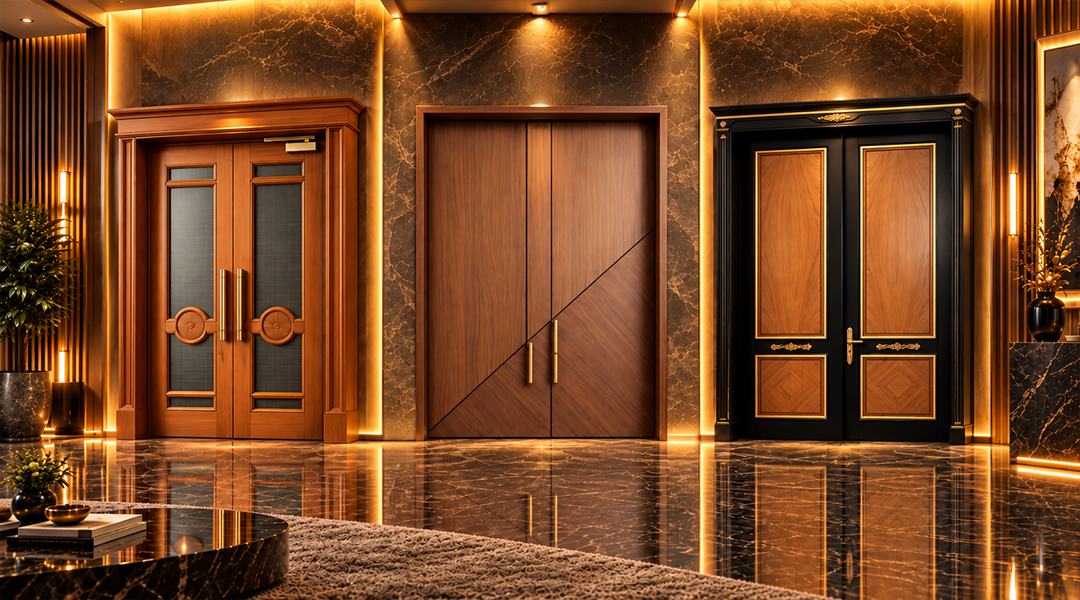
A bedroom door and a front door may share the same colour and design, but they serve different purposes. A bedroom door provides privacy and helps reduce sound transfer. An entrance door needs specifications suited to security and its location, and may also need to withstand sunlight, heat, and moisture. The difference between interior and exterior doors therefore goes beyond appearance or thickness. It includes the materials, internal construction, frame, locks, finish, and installation method. Before choosing doors for your home, distinguish between three locations: a door inside the home, an apartment entrance door in an enclosed corridor, and an exposed exterior door. Each setting has requirements that affect performance, lifespan, and maintenance costs. Interior and Exterior Doors at a Glance Interior doors separate spaces, manage movement between rooms, and provide privacy. Common examples include bedroom, bathroom, and home office doors. Exterior doors separate a home or building from its surroundings, with specifications that depend on exposure and security needs. Feature Interior doors Exterior doors Main purpose Privacy and separation between rooms Access control and separation from the outdoor environment Conditions Indoor use, with different moisture levels in bedrooms and bathrooms Potential exposure to sunlight, rain, dust, and temperature changes Materials Materials and construction suited to indoor use Materials and systems designed for the conditions at the installation site Locks Privacy or locking functions appropriate to the room Entry and security hardware suited to the entrance Insulation Sound reduction where needed Thermal insulation, sound reduction, and sealing appropriate to the location Finish Suited to indoor use and cleaning Suited to the expected weather exposure Installation Correct alignment, gaps, and secure fixing Also requires attention to seals, thresholds, and protection against water ingress What About an Apartment Entrance Door? An apartment door in an enclosed corridor may be sheltered from sunlight and rain, but it is still an entrance door. It needs suitable security, sound privacy, and specifications that meet the building’s requirements. Being indoors does not make it equivalent to a bedroom door. Differences in Materials and Construction The material name alone does not tell you how a door will perform. Wood, for example, can be used for both interior and exterior doors, but the construction, core, finish, edge treatment, and maintenance requirements may differ. To compare door materials properly, consider the complete assembly: Door leaf: The moving part of the door, including its outer surfaces and internal structure or core. Frame: The structure fixed into the wall opening that supports the hinges and lock strike. Hardware and seals: Hinges, locks, handles, seals, and any additional fittings. Finish: The final surface coating, along with the preparation and treatment beneath it. Installation: How the frame is secured to the wall and how the surrounding gap is treated. Interior options include timber doors, solid-core and hollow-core doors, and composite materials such as wood-plastic composite (WPC). The right choice depends on sound privacy, moisture resistance, appearance, and budget. For exterior doors, the product specifications must suit the installation location. Iron doors need appropriate protective treatments and finishes. Timber doors need construction and finishes suitable for their intended use. Aluminium door systems also vary in their construction, insulation, and sealing details. Metal World’s range includes wooden, iron, and WPC doors, providing a starting point for comparing options by material and intended location. When comparing products, ask for a written description of the door construction, frame, and finish. Labels such as “wooden door” or “waterproof door” do not provide enough detail on their own. Differences in Security, Locks, and Hardware A lock’s purpose depends on the door’s location. For a bedroom, the main goal is usually privacy. An entrance door needs to control access to the home and provide a suitable level of protection. A strong lock alone, however, is not enough. An entrance door’s performance depends on the leaf, frame, hinges, lock, and wall fixings working together. A high-specification lock fitted to a weak door leaf or poorly secured frame will not deliver the expected benefit. When choosing an entrance door, discuss: The lock type and its compatibility with the door’s construction. Reinforcement around the lock and hinge fixing points. Whether the hinges suit the door leaf’s weight and dimensions. The quality of the strike plate and its fixing within the frame. Spare parts availability and ease of maintenance. Compatibility with a smart or electric lock if you plan to install one. For bathrooms, consider a privacy lock that can be released from outside in an emergency, using hardware appropriate to the project. For exposed entrances, check that the locks, handles, and electrical components are suitable for moisture, dust, and outdoor conditions, as well as the door leaf itself. Differences in Insulation and Resistance to Sunlight and Moisture Thermal insulation, sound insulation, moisture resistance, and resistance to sunlight are separate properties. Good performance in one does not necessarily mean a door performs equally well in the others. Thermal Insulation Thermal insulation becomes more important when a door separates an air-conditioned room from the outdoors. Performance depends on the construction of the leaf and frame, the insulation materials, any glazing, and the effectiveness of the perimeter seals and threshold. A metal door does not automatically provide good thermal insulation. Review the design of the complete system and any available performance data. Sound Insulation Sound privacy can be a key consideration when choosing room doors. Masonite, for example, explains that its solid-core doors help reduce noise transfer compared with its hollow-core doors. However, gaps around and beneath the door also affect the result. A suitable door leaf with large gaps will not perform as well as a correctly installed and sealed assembly. If you have a particular need, such as a bedroom beside a reception room or a home office, ask for acoustic test data for the proposed system instead of relying solely on a “soundproof” description. Moisture Resistance Resistance to humidity is different from resistance to repeated splashing, immersion, or water collecting at the base of the door. A door leaf may tolerate moisture while its edges, surface covering, frame, or hardware remain vulnerable if they are not specified and installed for the same conditions. Ask about moisture resistance across the entire assembly, including the leaf, frame, finish, and metal components. Also confirm which cleaning methods are permitted. Sun Exposure A door near a window that receives several hours of direct sunlight faces different conditions from one in a shaded corridor. An exposed exterior entrance also needs materials and finishes suited to ultraviolet exposure and high surface temperatures. Products have different limits, so request written guidance confirming suitability for direct exposure and any requirements relating to a canopy, colour choice, or maintenance. How to Choose a Door for Its Location in Saudi Arabia Conditions vary across Saudi Arabia and from one property to another. An entrance near the coast faces different exposure from a sheltered entrance farther inland. A west-facing door exposed to afternoon sun also faces different conditions from one beneath a deep canopy. Start by identifying where the door will be installed and how exposed it will be. Then choose specifications suited to those conditions. Bedroom and Bathroom Doors For bedroom doors, focus on sound privacy, smooth operation, good-quality handles and locks, and a design that complements the rest of the home. Improving the door’s construction and sealing may contribute more to everyday comfort than additional decorative details. Bathroom doors need further checks, including: Whether the leaf and frame are suitable for the room’s humidity. Whether the finish can withstand your usual cleaning method. Protection of edges, cut-outs, and hardware openings according to the product instructions. Hardware suitable for humid conditions. Ventilation requirements when deciding on the gap beneath the door or any purpose-made vents. Interior WPC doors are one option, but check the specifications of the particular product. A moisture-resistant material description does not explain its limits for water exposure, installation requirements, or warranty conditions. Apartment Entrance Doors An apartment entrance door in an enclosed corridor generally calls for greater attention to security, corridor noise reduction, and a well-sealed closure than to direct sun exposure. Check the strength of the leaf and frame, the quality of the lock and hinges, the surrounding gaps, and ease of use for everyone in the household. If your project requires a fire-rated door, ask for a documented rating covering the complete required assembly, including the leaf, frame, and associated hardware. The material name or a description such as “heavy-duty” does not establish fire resistance. Do not assume that replacing a lock or adding a door viewer will automatically be suitable for every door. Some systems have specific instructions governing hardware preparation and modifications. Exposed Villa Entrance Doors First, clarify which entrance you mean: the gate in the boundary wall opening into the courtyard, or the villa’s main door separating the outdoors from an air-conditioned interior. For a boundary gate, the priorities may be privacy, security, weather resistance, and smooth operation. For the building’s entrance door, thermal insulation and effective air and water sealing become additional considerations. Before choosing, tell the supplier about: The direction the entrance faces and how long it receives direct sunlight. Any canopy and how much protection it actually provides. Possible exposure to rain or irrigation water. Proximity to the sea. Thermal or acoustic insulation requirements. Any glass, openings, or backing panels included in the design. Then request specifications suited to those conditions, covering the finish, seals, threshold, and locks, along with maintenance requirements. A canopy can reduce exposure, but the product still needs to suit its installation environment. Can an Interior Door Be Used Outdoors? Using an interior door outdoors is not recommended unless the manufacturer confirms that the specific product is suitable for those conditions. The door may look fine when first installed, then develop problems with continued exposure. These can include fading, damage to the surface covering, changes in dimensions, or difficulty closing. The effects vary according to the material, construction, and finish. Adding paint or a canopy does not automatically make an interior door suitable for exterior use. Its limitations may lie in the core, adhesives, frame, or hardware. Before using any door outdoors, confirm three things: The product specifications permit exterior use. The actual level of exposure falls within its stated conditions of use. The warranty covers that application and installation method. If the information is unclear, choose a system designed for the intended location and supported by documented specifications. Frequently Asked Questions Are All WPC Doors Suitable for Outdoor Use? No. WPC refers to a category of composite materials. It does not guarantee that every door made from them can withstand sunlight, heat, and rain to the same extent. Formulations, construction, surface coverings, and additives vary between products. For example, a BMTPC technical assessment for one WPC door system includes restrictions on installation locations and exposure to sunlight and water. Those restrictions apply to that particular system and illustrate why each product’s documentation matters. If you want a WPC door for an exposed entrance, request written confirmation of its suitability for exterior use, exposure limits, and warranty conditions. Does Door Thickness Alone Indicate Quality? No. Thickness is one factor, but it does not reveal the type of internal core, the strength of the hinge and lock fixing points, the frame quality, or the level of insulation and finishing. Two doors with the same thickness can perform very differently. Compare their internal construction, material specifications, hardware quality, and available test data, then assess the quality of installation. Does Every Exterior Door Provide Thermal and Sound Insulation? No. “Exterior” describes the intended application, but it does not define the level of insulation. Ask for product performance data and check the insulation, seals, frame, threshold, and any glazing, because these components work together. Does the Frame Have to Be Made from the Same Material as the Door Leaf? Not necessarily. It must, however, be compatible with the leaf and suitable for its weight, dimensions, installation environment, and fixing method. For systems with specific performance ratings, follow the approved assembly configuration rather than substituting components without checking their suitability. What Information Should I Prepare Before Requesting a Quote? Prepare the number of doors, approximate opening dimensions, and photos of each location. Explain the purpose of each door and its exposure to sunlight and water. Mention any requirements for sound privacy, thermal insulation, or locking hardware. Then request a quote that clearly specifies the leaf, frame, hardware, finish, and installation. Choosing a door starts with understanding where it will be used. Once the conditions are clear, comparing materials and designs becomes much easier. Browse Metal World’s door range and send your project details through the official website to discuss suitable options for rooms, entrances, and outdoor spaces.
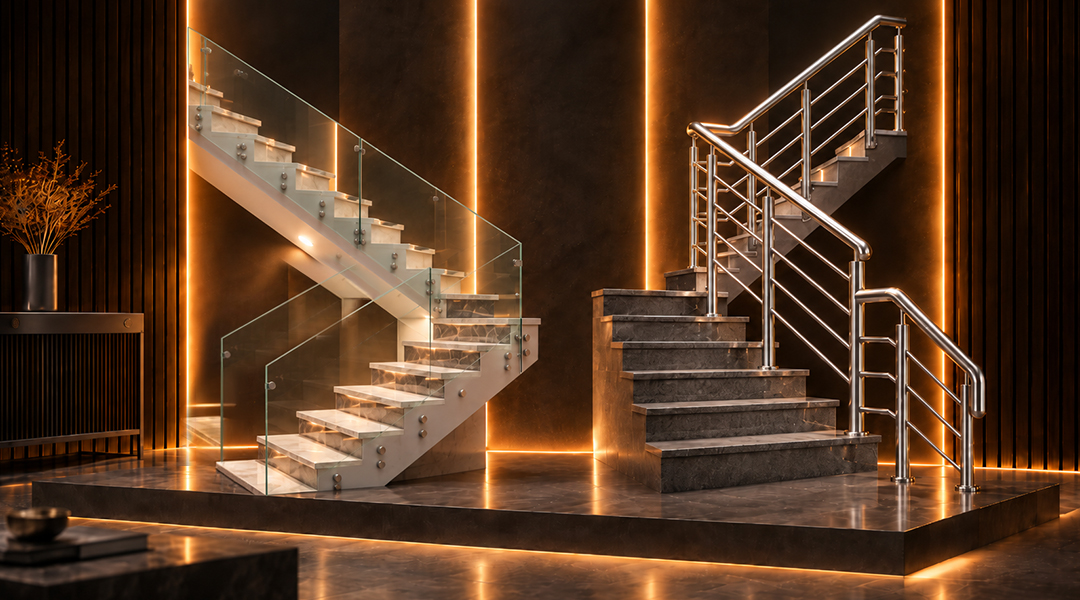
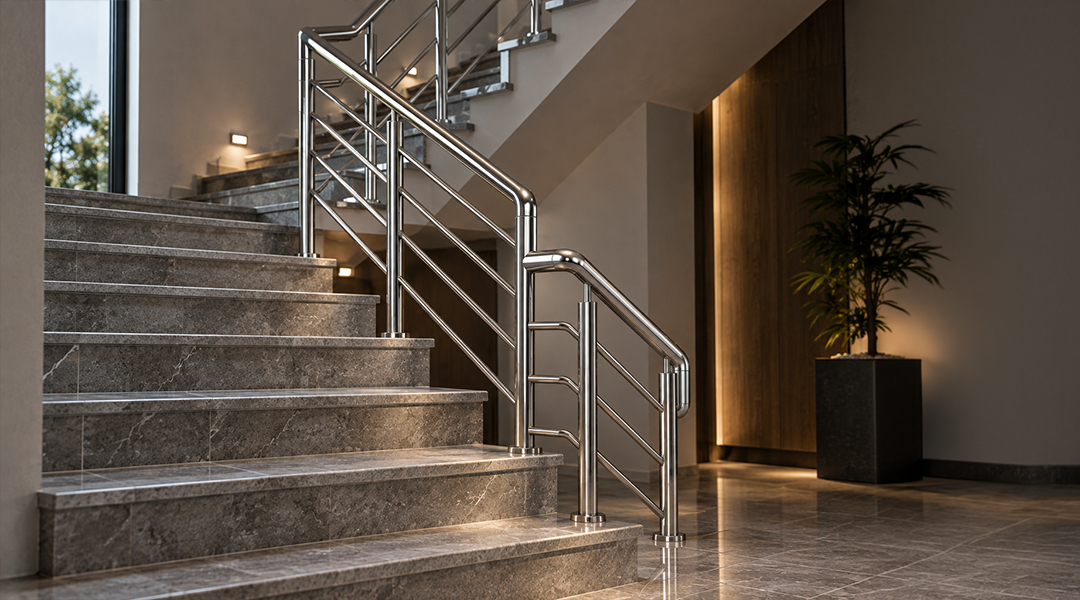
When designing a staircase or renovating a balcony, one question often comes up: should you choose glass or stainless steel railings? Glass creates an open feel and lets light flow through the space, while stainless steel adds a distinctive metallic touch and offers a wide range of design options. But the right choice goes beyond appearance. It also depends on where the railing will be installed, how it will be used, the quality of the installation, and your budget. Sometimes, the best solution is a combination of both materials. In this guide from Metal World , we explore the key differences to help you choose a railing that suits your home, along with what to check before moving ahead with installation. The main difference lies in the material that forms the protective barrier and how it is secured within the railing system. Glass railings use glass panels to form the barrier. These may be fitted between metal posts or secured in a purpose-designed base channel. Frameless glass railings minimise the visible posts and framing around the panels, but they still rely on a structural fixing system. Explore glass railing options here. Stainless steel railings, on the other hand, usually consist of posts and a top handrail, with bars or other infill elements depending on the design. Glass can also be fitted within this framework, creating a system that combines metal and glass. When comparing glass options, it helps to understand the terminology: Tempered glass: Heat-treated glass that is stronger than ordinary glass of the same thickness and breaks into small pieces when shattered. Laminated glass: Two or more layers of glass bonded with an interlayer that helps hold the fragments together if the glass breaks. Tempered laminated glass: Glass that combines heat treatment with lamination. These terms describe two different properties that can be incorporated into the same panel. This is why the term “safety glass” alone does not tell you whether a product is suitable for a railing. The glass composition and specifications need to match the system’s design and installation location. A practical comparison starts with your priorities. Do you want to make the staircase a focal point, preserve the view, simplify cleaning, or keep installation costs within budget? In terms of appearance, glass is a good choice if you want to maintain clear sightlines throughout your home. Stainless steel suits those who prefer the railing to stand out as part of the décor. As Pilkington explains, glass barriers provide physical separation while preserving light and visibility. When it comes to cost, neither material is always the cheaper option. A custom stainless steel railing may cost more than a simpler glass system. Comparing prices per metre can also be misleading if one quote includes supply, installation, and finishing, while another covers materials only. Both systems need regular care. To clean stainless steel railings, use a soft cloth and a suitable cleaner, then rinse and dry the surface. Avoid steel wool and cleaning products containing chlorine or hydrochloric acid. For glass, follow the manufacturer’s care instructions for the panels and any surface coatings. Pay particular attention to corners, panel edges, and fixing points, where dust can collect. Safety depends on the design of the entire system, rather than the material alone. A well-specified glass panel still needs suitable fixings. Similarly, a metal railing needs posts, sections, connections, and a supporting base designed to withstand the expected loads. Before installation, ask for clarification on the following: Material specifications: The glass composition and thickness, or the stainless steel grade, section dimensions, and wall thicknesses. Fixing method: Where the railing will be anchored, which fixings will be used, and whether they are suitable for the supporting structure. Barrier height and openings: Whether these meet local requirements and suit the intended use. Edges and handrail details: Smooth edge finishes, a comfortable grip, and no sharp components. System documentation: Technical specifications and any test reports or calculations required for the project. For glass systems, also ask what happens if a panel breaks and how the design accounts for that possibility. Tempered and laminated glass behave differently when broken. Holding the fragments together does not, by itself, prove that the barrier will continue to carry the required loads. There is no single glass thickness that suits every project. The right specification depends on panel dimensions, the fixing method, and the required loads. The same applies to the dimensions of stainless steel posts and sections. For an indoor staircase, glass railings can be a good choice if you want to preserve natural light and show off wooden or marble steps. If you prefer metallic lines and a more prominent handrail, consider stainless steel or a combination of stainless steel and glass. When choosing an indoor stair railing, check the staircase width and handrail position. An attractive design should also allow comfortable movement and provide a secure grip when going up or down. For balconies, glass offers an open view, especially when the outlook is a major part of the space’s appeal. An outdoor system, however, also needs to account for wind and water exposure, drainage, and safe access for cleaning. Stainless steel components need a grade and finish suited to the environment. Staining or surface discolouration can occur if the wrong grade is selected, fabrication is poor, or cleaning is neglected, particularly in environments exposed to salt. A stainless steel railing with glass panels is worth considering if you want the transparency of glass alongside visible metal posts or a metal handrail. This combination can work well for: A modern staircase that brings together wood and metal. A space where you want to preserve the view while adding a coordinated metal handrail. A project where you want to compare the cost of glass panels fitted between posts with a frameless system. A home where the railing finish should match other metal details. The overall look can change considerably depending on the stainless steel finish, the number of posts, and the colour and transparency of the glass. However, combining the two materials does not automatically mean a lower cost or greater safety. Both depend on the system’s specifications and installation. Start with what the space needs, then compare designs that meet those needs. If your priorities are the view and natural light, explore glass options. If you prefer a stronger metallic presence and a wider choice of bar and post designs, start with stainless steel. If you want both looks, ask for a design that combines stainless steel and glass. Next, request detailed quotes based on comparable specifications. A railing installation quote should clearly set out: The lengths, dimensions, and method used to calculate quantities. The glass specifications or stainless steel grade and sections. The posts, handrails, fixings, and finishes. Whether transport, installation, and preparation work are included. The installation timeframe, warranty terms, and maintenance requirements. Consider how easy the design will be to maintain, too. Large glass panels reduce the number of joints, but you still need suitable access to clean them. More intricate metalwork adds visual character, though it may take longer to clean around corners and details. To make a choice that suits your home, gather photos and measurements of the space and decide on your priorities before requesting a quote from Metal World. This makes it easier to discuss specific options and understand how the cost of each design compares. Are stainless steel railings always cheaper than glass? No. Stainless steel costs vary depending on the amount and grade of metal, section thicknesses, and design complexity. Glass costs depend on the panel composition, dimensions, and fixing system. A simple stainless steel design may cost less than a frameless glass system, but that does not apply to every project. A fair comparison means comparing quotes that cover the same specifications and scope of work. Are glass railings safe for children? They can be suitable when designed and installed to meet safety requirements, using the right glass and fixing system. Continuous glass panels can reduce openings within the barrier, but gaps at the sides and below the panels still need to be checked. The design should also avoid features that make climbing easier. Good design, proper installation, and keeping climbable furniture away from the railing all play an essential role in safe use.
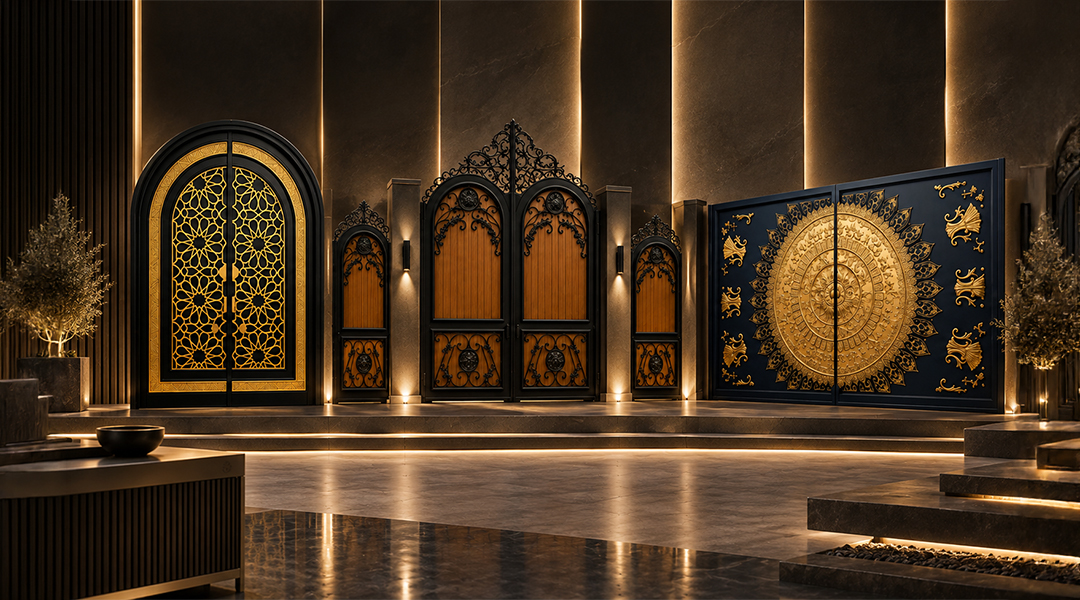
Your entrance door is something you choose once and use every day. A design might catch your eye in a photo, but the real test comes when you open it. Does it move smoothly? Does it give you the privacy you need? Does it suit the entrance space and the style of your home’s exterior? When ordering custom iron doors in Riyadh, choosing a pattern and colour is only the beginning. The quality of the finished door depends on its structural design, accurate measurements, surface preparation, suitable locks and hinges, and careful installation that keeps everything aligned and working smoothly. This guide explains the differences between popular designs, the factors that affect cost, and the details worth discussing before you approve a quote, helping you choose a door that suits your home, budget, and everyday needs. When Is a Custom Iron Door Better Than a Ready-Made One? A custom door makes sense when you need it to fit an existing opening, complement a particular architectural style, or meet requirements that a ready-made option cannot accommodate. Custom fabrication is particularly useful for: Non-standard dimensions: Wide or tall entrances, or openings with fixed side panels. Greater privacy: A solid front or a combination of openings and backing panels suited to the entrance’s location. A coordinated exterior: Matching the door’s lines and colours with boundary railings, handrails, and the driveway gate. Site constraints: Nearby steps, a narrow passage, or floor levels that need to be taken into account. Specific practical needs: Double doors, a wider clear opening, or provision for a compatible electric lock. A ready-made door may be suitable if its dimensions and specifications meet your needs and it requires only minor site adjustments. A fair comparison should include the door, installation, and any necessary alterations, rather than the purchase price alone. Iron Door Designs for Homes and Villas Start by deciding what the door needs to do before choosing how it should look. A gate in a boundary wall has different requirements from a door that opens directly from the street into an air-conditioned interior. Pedestrian entrances also have different needs from vehicle gates. Here is a quick comparison of the main options: Design Overall look What to check Modern iron doors Clean lines and understated details Balanced proportions and a consistent finish across large surfaces Laser-cut iron doors A wide choice of geometric and decorative patterns Opening sizes, backing panels, and privacy Decorative ironwork doors Prominent details with a classic or contemporary feel The weight of decorative elements, ease of cleaning, and suitability for the entrance You can combine more than one style in a single door, as long as the design works well in daily use and complements the exterior. Modern Iron Doors Modern iron doors feature straight lines, balanced sections, and minimal ornamentation. They may have solid panels, horizontal or vertical slats, or a combination of iron and other materials. This style works well with contemporary exteriors, but it calls for careful attention to detail. Simple designs make uneven gaps, welding defects, and paint imperfections easier to notice. When choosing a modern door, review the width and spacing of the slats, the handle position, and the surrounding frame. Check that the design does not allow more visibility into the property than you want, especially if it faces a courtyard or family seating area. Laser-Cut Iron Doors Laser-cut iron doors allow for precise, varied patterns, from simple geometric shapes to intricate decorative designs. They are a good option if you want an entrance with a distinctive character and flexibility in how the open areas are arranged. However, “laser-cut” describes the cutting method. It does not, on its own, determine the door’s strength or quality. The result also depends on the sheet thickness, structural framework, distribution of openings, and quality of assembly and finishing. Before approving a pattern, discuss: The size of the openings and how much they reveal of the space behind the door. Whether a backing panel is needed, including its material, colour, and transparency. How easy the pattern will be to clean, particularly around small details. How the backing panel will be secured and whether it can be replaced later. Metal World’s range includes laser-cut doors with Lexan backing panels, alongside other iron entrance door designs. Decorative Ironwork Doors Decorative ironwork doors give an entrance a strong visual presence, whether through traditional ornamentation or simpler arrangements suited to modern exteriors. Choose decorative elements that suit the size of the door. Dense detailing can look crowded in a small entrance, while a larger entrance benefits from a balanced arrangement of solid elements and open space. Also consider the finished door’s weight, how the decorative pieces are attached, and the quality of the joints and connections. If a backing panel is added for privacy, discuss how it will affect the weight, maintenance, and appearance from both sides. Metal World’s decorative ironwork door with a Lexan backing panel offers an example of this style. What Affects the Cost of Custom Iron Doors in Riyadh? There is no single price that applies to every iron door. Two doors may look similar and have the same dimensions, yet differ in their framework, material thicknesses, finish, hardware, and installation requirements. When comparing iron door prices in Riyadh, consider the following: Factor How it affects the cost Door dimensions Affect material quantities, weight, transport, and fixing requirements Framework sections and thicknesses Vary according to the design, dimensions, and intended use Sheet metal and decorative details Costs change with thickness, detail density, and fabrication method Number of door leaves and fixed panels Affect assembly, hardware, and installation work Backing panels and additional materials Add material, fixing, and finishing costs Protective treatments and paint Depend on surface preparation, corrosion protection, and the finishing system Locks and hinges Vary by type, suitability for the expected use, and any additional features Site conditions May require removal of an existing door, preparation of the opening, or extra equipment Is the Price Calculated per Square Metre or per Door? The quote should clearly explain how the price is calculated. If it is based on square metres, ask whether the measurement refers to the wall opening or the outer dimensions of the frame, and what the rate includes. For example, an opening measuring 1.50 metres wide by 2.40 metres high has an area of 3.60 square metres. This provides a starting point for calculations, but it is not enough to determine the cost without knowing the specifications. For a fair comparison, send the same design, measurements, and specifications to each supplier. Then compare the total cost, including transport, installation, tax, and any additional work. The Custom Door Process: Site Survey, Measurements, Fabrication, and Installation Creating a custom door involves several connected stages. A detail left unresolved at the start can become an expensive change once fabrication is complete. 1. Define Your Requirements and Assess the Site The process begins by confirming the entrance type, privacy requirements, number of door leaves, and opening direction. A site survey checks the condition of the walls, the available fixing points, and any obstacles that could affect the door’s movement. 2. Take Final Measurements The opening should be measured at several points to check its alignment, allowing for the finished floor level and the thickness of surrounding finishes. It is important to distinguish between the wall opening, the frame dimensions, and the clear passage width after installation. An opening may appear wide enough initially, but the frame and door leaf can reduce the space available to pass through. 3. Approve the Drawing and Specifications Before fabrication begins, approve a drawing showing the dimensions, layout, opening direction, backing panel, handles, and colour. A reference photo helps communicate the idea, while the drawing confirms exactly what will be made. 4. Fabrication, Surface Preparation, and Painting The components are cut and assembled according to the approved design. Welds and edges are then checked, and the surface is prepared for the agreed protective treatment and paint system. 5. Install the Door and Test Its Operation Installation includes securing and aligning the frame, fitting the door leaves and hardware, and testing the opening, closing, and locking mechanisms. At handover, open and close the door yourself several times. Check that it does not scrape against the floor, that the gaps are even, and that the lock works easily without having to lift the door leaf or push it hard. Specifications to Discuss Before Approving a Quote Clear specifications make it easier to understand what you are paying for and assess the finished result. Framework and Material Thicknesses Ask for the dimensions and wall thicknesses of the sections used in the frame and door leaves, along with the sheet metal thickness where applicable. Descriptions such as “heavy-duty” or “premium” are no substitute for written specifications. Extra weight alone does not guarantee better quality. Rust Protection and Paint Finish For exterior iron doors, discuss surface preparation and corrosion protection before choosing a colour. Ask whether the finish is suitable for sun exposure, how welds and edges will be treated, and how any scratches caused during transport or installation will be repaired. Suitable Locks and Hinges Hinges should be selected to suit the door leaf’s weight, dimensions, and frequency of use. Discuss the lock type, availability of spare parts, and maintenance requirements. If you want a smart or electric lock, mention it before fabrication so that mounting dimensions, any required wiring, and the opening mechanism can be checked in advance. Privacy and Insulation A solid door can block the view into your property, but that does not automatically mean it provides thermal insulation, sound insulation, or protection against dust. If these are priorities, ask about the construction of the door leaf, any internal insulation, seals, and the treatment of gaps and the threshold. Scope of Work and Warranty The quote should specify removal, supply, transport, installation, making good around the opening, and any required wiring. Ask for the warranty duration, coverage, and exclusions to be documented for fabrication, paintwork, and hardware. Common Mistakes When Ordering Custom Iron Doors Some problems will not show up in a design photo, but they can affect daily use for years: Approving measurements before finishes are complete: Marble flooring and plasterwork can change the finished floor level or opening dimensions. Choosing a design without checking the opening direction: The door leaf may hit steps or a wall, or obstruct a passage. Comparing only the price per square metre: One quote may include painting, installation, and hardware, while another excludes them. Adding excessive decoration or weight: Extra details require suitable framing, hinges, and fixings, and can increase maintenance needs. Assuming a backing panel guarantees full privacy: Visibility depends on the material, transparency, and lighting behind it. Focusing on paint colour while overlooking surface preparation: A good appearance at handover does not reveal the quality of the protection beneath the paint. Relying on verbal agreements: Colour, thicknesses, lock type, and installation scope should all be documented. Leaving operational checks until later: Any stiffness, scraping, or difficulty locking should be raised at handover. It is also useful to agree on care instructions, including cleaning, lubricating moving parts according to the manufacturer’s recommendations, and treating scratches before they develop into larger problems. How to Request a Quote from Metal World To get a quote that reflects your project, prepare a clear description of the door instead of simply asking for a price per square metre. Start by browsing Metal World’s door designs and product range, then send the following information using the contact options on its website: The project location and neighbourhood in Riyadh. The number of doors and whether they are pedestrian entrances or vehicle gates. The approximate width and height of each opening. Photos of the site from inside and outside. A reference image or a description of your preferred style. The level of privacy required, plus your preferred colour or backing panel if already chosen. The project stage: under construction, fully finished, or replacing an existing door. Your target completion date and any special locking or operating requirements. Frequently Asked Questions Does the Quote Include Painting, Installation, and Hardware? That depends on what is listed in the quote. Ask for surface preparation, rust protection, painting, locks, hinges, handles, transport, and installation to be clearly specified. Also check whether tax, removal of the old door, and repairs to the wall or floor around the frame are included. What Information Is Needed to Estimate the Cost and Lead Time? The supplier will need the location, approximate dimensions, number of doors, photos of the openings, preferred design, backing panel and finish, hardware requirements, and details of site readiness. The lead time can be confirmed after reviewing these details, material availability, and the fabrication and installation schedule. It is best to include an agreed delivery date in the contract. What Is the Best Thickness for an Exterior Iron Door? There is no single thickness that suits every door. The right choice depends on the door’s dimensions, structural design, reinforcement layout, leaf weight, and fixing method. Ask for a complete set of specifications rather than judging the door by sheet thickness alone. Do Laser-Cut Iron Doors Provide Privacy? Privacy depends on the size and arrangement of the openings, whether there is a backing panel, and how transparent it is. If privacy is a priority, ask to see a backing panel sample or a similar finished door, and discuss how indoor lighting at night may affect visibility. Does an Exterior Iron Door Need Maintenance? Yes. It needs periodic inspection, cleaning, and care suited to its finish, hardware, and exposure conditions. Watch for scratches, rust spots, wear in the hinges and lock, and changes in how smoothly it moves. Follow the maintenance instructions supplied with the door. Choosing the right door starts with a design you like and depends on clear specifications and careful workmanship. If you are planning to order custom iron doors in Riyadh, send your measurements and entrance photos to Metal World and request a quote covering everything from the framework and finish to the hardware and installation.
When searching for the best WPC door manufacturer, you will often find offers that look similar in photos but differ considerably in the details. One quote may include the door leaf, frame, and installation, while another covers the leaf alone. A warranty might feature prominently in an advertisement, yet its conditions only become clear after purchase. Making the right choice starts with understanding exactly what you will receive. How is the door constructed? What are the frame and finish specifications? Who is responsible for measurements and installation? And how will any problems be handled once the door is in use? Whether you are fitting out a home or managing a residential development in Saudi Arabia, this guide will help you compare WPC doors using clear criteria and choose a company that offers a suitable product backed by a documented agreement. What Are WPC Doors, and Where Are They Used? WPC stands for wood-plastic composite: a blend of wood-based materials, polymers, and additives that varies according to the product formulation and manufacturing process. These products are also known as wood-plastic doors. WPC doors are available as interior options for bedrooms, bathrooms, and offices, depending on the specifications of each model. They appeal to buyers looking for a finish that complements their interiors while meeting practical needs such as moisture resistance and easy maintenance. However, the material name does not mean every product is the same. Doors can differ in: The construction of the leaf, including any internal cavities or reinforcement. Leaf thickness and the distribution of material within it. The surface covering or finish. Frame and architrave specifications. How the hinges and lock are secured. Permitted exposure to humidity, water, and heat. Moisture resistance does not automatically make a door suitable for every setting. Installation in a well-ventilated bathroom is different from continuous exposure to shower water or direct sunlight. A BMTPC technical assessment for one WPC door system, for example, sets out restrictions on exposure to sunlight and continuous water contact. These restrictions apply to that particular system and highlight the importance of checking the specific product’s documentation before choosing a moisture-resistant door for any location. Understanding the Manufacturer, Supplier, and Installer Before comparing companies and prices, establish the role of the business you are dealing with. It may be a manufacturer, a supplier, or a company that handles both supply and installation. Company type Main role What to check Manufacturer Produces the door or specific components Manufacturing location, specifications, quality control, and ability to fulfil the order Supplier Sources doors from one or more manufacturers Product source, consistency of specifications, availability, and warranty responsibility Installer Takes measurements, fits doors, and adjusts them as agreed Installer experience, fixing methods, and responsibility for measurement or installation errors Full-service provider Coordinates supply, measurements, installation, and follow-up Written responsibility for each stage A manufacturer may offer useful production and customisation options, while a supplier may provide well-documented products and reliable service. Alongside the company’s role, focus on clear accountability and the quality of its work. Ask specifically which stages are completed locally. Is the leaf manufactured from raw materials, or imported and then cut, prepared, and finished? Does the frame come from the same source? These answers help you understand the product and the origin of its components. What to Look for in a WPC Door Manufacturer or Supplier The right company for your project should be able to document the door’s specifications, provide a representative sample, and meet its commitments for supply, installation, and after-sales service. Door Leaf, Frame, and Finish Specifications Start by requesting a specification sheet or a detailed description attached to the quote. A photo shows the design, but it does not reveal the internal construction or how securely the hardware is fitted. For the door leaf, check: Finished thickness and dimensions. Internal construction, including any cavities and reinforcement. Hinge and lock preparation, and how the hardware is secured. Permitted trimming and modification limits. Finish type and edge treatment. Suitability for the intended location. Do not base your decision on leaf thickness alone. Two doors of the same thickness may differ in construction, finish, and the durability of their hardware fixing points. For the WPC frame, check: Its material, profile dimensions, and internal construction. Compatibility with the finished wall thickness. How it will be secured within the wall opening. Preparation for hinges and the lock strike. Whether architraves and seals are included, where required. For the finish, inspect colour consistency, the adhesion of any surface covering, and the quality of corners and edges. Ask for cleaning instructions, especially if the door will be installed in a bathroom or an area that is cleaned frequently. Written Warranty Terms The value of a WPC door warranty depends on what it covers and how claims are handled, as well as its duration. Before approving the order, request a document that clearly states: The company responsible for the warranty and its contact details. The products and models covered. When the warranty begins. Covered defects, such as manufacturing faults or separation of the surface covering, subject to the stated terms. Exclusions relating to water, sunlight, or misuse. Whether locks, hinges, and handles are covered separately. Responsibility for installation and door adjustments. The inspection, repair, or replacement process, including any associated costs. Also ask what happens if a repair does not resolve the problem or the door needs replacing. Who pays for removal, transport, and reinstallation? Keep the quote, invoice, warranty document, and approved sample or its recorded details. These provide a clear reference if follow-up is needed. Sample Quality and Previous Installations A sample gives you an opportunity to assess the product before committing to a full order. Where possible, inspect an installed door rather than relying on a small colour or finish sample. During the inspection: Open and close the door several times. Test the handle and lock. Check that the gaps around the leaf are even. Inspect corners, edges, and hardware fixing points. Check that the frame is secure and the door moves smoothly. Ask about any differences between the sample and the specifications in your quote. Ask to see previous installations similar to your project. Fitting doors in an individual apartment involves different coordination and installation requirements from supplying an entire development. For larger orders, consider agreeing on an installed sample door for approval before the remaining quantity is completed. Record its specifications, colour, and hardware so both parties have a clear reference for acceptance. Lead Times and After-Sales Service Door delivery can affect the finishing and handover schedule, so clarify when the lead time begins. Is it counted from payment, approval of measurements, or approval of the colour and sample? Also review: The time needed for order preparation, transport, and installation. Site readiness requirements. Availability of special sizes or colours. Whether delivery can be split into batches. How items damaged in transit will be handled. Future availability of replacement hardware or components. How to request maintenance and the expected response time. For larger projects, request a door schedule showing each door’s location, dimensions, opening direction, and specifications. Numbering doors by room or unit helps prevent confusion during delivery and installation. How to Compare WPC Door Quotes A fair comparison starts with sending the same requirements to each company. If dimensions, hardware, and finishes differ, the price alone will not tell you which offer is more suitable. Use the following checklist when reviewing WPC door prices: Item What the quote should specify Door leaf Model, construction, thickness, dimensions, and finish Frame Material, profile, and compatibility with the wall thickness Architraves and seals Type, quantity, and whether they are included Hinges Type, quantity, and specifications Lock and handle Agreed model or specifications Measurements Who takes and approves them, and who accepts responsibility Installation Scope of work, fixing, and adjustment Transport Whether delivery and moving the doors to the installation location are included Additional work Removal of old doors, alterations to openings, or making good around them Final price Pricing basis, tax, and any additional charges Warranty and timing Warranty coverage and the delivery and installation schedule Pay attention to what “price per door” actually means. It could refer to the leaf alone, a set including the frame and architraves, or a complete door with hardware and installation. For example, one quote might include only the leaf and frame, while another also covers locks, hinges, transport, and installation. The first cannot be considered cheaper until the missing items have been added. Compare the total installed cost for the specifications you need, then weigh up product quality, warranty coverage, and service. Questions to Ask Before Approving an Order Before signing an agreement or confirming quantities, get clear answers to these questions: Is the company a manufacturer or supplier, and which stages does it handle itself? Who manufactures the product, and what is the country of origin of the door and its main components? What are the specifications of the leaf, frame, and finish? Is the product suitable for bedrooms and bathrooms? What are its limits for water and sun exposure? Does the price include all hardware, transport, installation, and tax? Who is responsible for measurements and opening directions? Will the full order match the approved sample, and how will any differences be resolved? When does the lead time begin, and how ready must the site be? What are the warranty conditions, and who handles maintenance requests? How will the doors be inspected, accepted, and checked for outstanding issues? It is also useful to ask directly about the limitations and potential drawbacks of the WPC doors being offered. Ask the company to explain what could affect that particular product, such as high temperatures, unsuitable cleaning products, or trimming and modifications outside the manufacturer’s instructions. Some problems relate to the product or its finish. Others result from installation, such as scraping against the floor, difficulty locking, or loose hardware. Understanding these issues in advance helps you choose a suitable door and a company equipped to support it. WPC Door Options at Metal World You can begin your comparison with the WPC doors in Metal World’s product range, which includes models listed as “W Flat” doors. When asking about a particular model, send site photos, approximate measurements, and the number of doors required. Explain whether they are intended for bedrooms, bathrooms, or a project with multiple residential units. Request a quote that specifies: The model, leaf, and frame specifications. Colour, finish, and available samples. The country of origin of the selected model. Included hardware. The scope of measurement and installation services. Lead time and warranty conditions. You can use this wording to make your request clearer: I would like a quote for (…) WPC doors for a project in (city), for use in bedrooms/bathrooms. I have attached approximate measurements and photos of the openings. Please include the leaf and frame specifications, country of origin, hardware, transport and installation, tax, lead time, and warranty terms. This gives you a quote that you can assess and compare against your project’s requirements. Frequently Asked Questions Does the Price Include the Frame, Hinges, Lock, and Installation? That depends on the quote. Do not assume that “complete door” includes everything. Ask for the leaf, frame, architraves, hinges, lock, handle, transport, and installation to be listed clearly. Also check whether tax and any additional site work are included. How Can You Verify the Country of Origin and Warranty Terms? Ask for the manufacturer’s name and model details. Check the origin information on the product or packaging and the associated documents. Where needed, request a certificate of origin or supporting documentation that matches the product being offered. If some stages are completed locally, ask which components are manufactured locally and which are imported. The supplier’s address or the location where the door is prepared does not establish the origin of every component. For the warranty, check that it identifies the responsible company, applies to your model and order, and clearly explains its coverage, exclusions, and claims process. Is the Country of Origin Enough to Choose the Best WPC Door Manufacturer? No. Country of origin is useful for product traceability, but your decision should also consider documented specifications, a good-quality sample, careful installation, and a warranty that can be honoured. Compare the actual product and the service that comes with it. Are WPC Doors Suitable for Every Bathroom? You cannot assume that every product is suitable. Check whether the specific model can handle the bathroom’s humidity and likely water exposure, and review its cleaning and installation instructions. The frame, finish, and hardware should also be included in that assessment. Is a Heavier or Thicker Door Better? Not necessarily. Weight and thickness alone do not reveal the quality of the construction, finish, or hinge and lock fixings. Choose a complete set of specifications suited to the door’s size and use, supported by a representative sample and an opportunity to test its operation. What Is the Most Important Step When Accepting the Doors? Check the quantities, models, dimensions, colours, and hardware against the order, then test every door after installation. Record any scratches, differences, scraping, or difficulty closing, and agree on a date for resolving the issues. Finding the best WPC door manufacturer in Saudi Arabia becomes easier when your requirements are clear. Start with a sample, compare equivalent quotes, and approve an agreement that defines the product, installation, and warranty. To explore the options for your project, browse Metal World’s products and contact the company through its official website for specifications and a quote.
Stair railings influence both the look of your home and how you use it every day. Glass can make a staircase feel lighter and more open, wood adds warmth, and iron offers designs ranging from simple lines to classic decorative details. Choosing the best stair railing for your home, however, takes more than comparing photos. You also need to consider how comfortable the handrail is to hold, how the system is secured, the available passage width, ease of cleaning, and whether the design suits children and older adults. In this guide, we compare five popular materials and explain how to choose between them based on your home’s style, everyday needs, and budget. What to Consider Before Choosing a Material Start with the railing’s purpose. A stair railing forms a protective barrier along the open side of a staircase or landing. The handrail is the part you hold for support when going up or down. These can be combined in one design, or a separate handrail can be mounted on the wall. Key considerations include: Design and installation safety: Heights, openings, loads, and fixing points should be checked against the project requirements and applicable building code. Comfort: A comfortable grip, smooth surfaces without sharp edges, and a continuous path for your hand. Staircase width: Allow for the space taken up by posts, handrails, and bases when calculating the clear passage width. Location: An indoor staircase in an air-conditioned home faces different conditions from an outdoor staircase exposed to sunlight and moisture. Who will use it: Children and older adults may have different needs when it comes to openings, layouts, and handrails. Maintenance: Some designs show fingerprints easily, while intricate decorative details take more effort to clean. Repair options: Ask how a glass panel, wooden component, or fitting can be replaced if needed. The material alone does not determine safety. A railing may look sturdy while its fixing method or design details still need attention. Ask for a drawing showing the complete system before fabrication begins. Glass Stair Railings Glass railings suit homeowners who want to preserve natural light and clear sightlines, particularly in modern interiors or where the staircase sits at the centre of the home. Their transparency also allows marble or wooden stairs to stand out. Fixing options include metal posts, continuous base channels, side-mounted systems, and other solutions designed for the location. When choosing a glass railing, discuss: The glass composition, thicknesses, and treatment. Panel dimensions and how they will be supported. The bases and fixings, and their suitability for the supporting structure. Edge finishes and gaps between panels. Whether a separate or top-mounted handrail is needed. How a damaged panel can be replaced. Describing the glass as “tempered” is not enough to approve the entire system. The National Glass Association explains that laminated glass offers benefits in railing systems, including the tendency for fragments to remain attached to the interlayer after breakage, helping retain the glass within the system. The appropriate glass specification still needs to be approved for the design and project requirements. Maintenance includes cleaning fingerprints and water marks, along with inspecting fittings and joints according to the system’s care instructions. Stainless Steel Stair Railings Stainless steel railings create a distinctive metallic look. They are available in polished or brushed finishes and can be used on their own or combined with glass and wood. When inspecting a sample or completed installation, check the consistency of the welds, the finish at connections, the alignment of the posts, and the comfort of the handrail. These details affect both appearance and everyday use. Stainless steel needs appropriate care. A build-up of contaminants or unsuitable cleaning products can affect its surface. Ask for cleaning instructions rather than assuming it requires no maintenance. Iron Stair Railings Iron railings offer considerable design flexibility, from understated vertical bars to decorative patterns and traditional detailing. Depending on the design, they can suit a modern staircase or a villa entrance with a classic style. Before approving the design, review: Section dimensions and wall thicknesses. The arrangement of posts and openings. Weld quality and the finish at connections. Fixing methods and base details. Surface preparation, corrosion protection, and paint. How scratches can be repaired and the finish renewed. For outdoor staircases, corrosion protection becomes especially important, along with the treatment of welds and areas where water might collect. Simple designs are generally easier to reach and clean than intricate decorative work. Choose details you can comfortably maintain over time. Wooden Stair Railings Wooden railings bring warmth to a space and work well with timber flooring, soft colours, and both classic and contemporary interiors. Wood can be used for the entire railing or just the handrail, paired with metal posts or glass panels. This combination lets you enjoy its appearance and feel without overwhelming the space. Check the wood species, how it has been dried, the assembly method, finish quality, and the treatment of joints and ends. For outdoor use, request specifications intended for that environment. Maintenance involves checking for scratches, wear in the protective finish, and the condition of joints, with refinishing as needed. Wooden surfaces cannot all be repaired in the same way, so ask about the recommended repair method before buying. Aluminium Stair Railings Aluminium railings come in a variety of designs, colours, and finishes. They can be used in simple arrangements or combined with glass. Aluminium is relatively lightweight, but weight alone does not determine railing quality. The sections, connections, and fixings need to be assessed as a complete system. Pay attention to: Section dimensions, wall thicknesses, and reinforcement. The rigidity of the assembly and quality of the connections. Whether the coating is suitable for indoor or outdoor use. Compatibility between fixings and any metals in contact with one another. Availability of replacement parts in the same colour and finish. Choosing aluminium does not eliminate maintenance. Regular care still includes cleaning the surface and checking the coating, connections, and fixings. How Is the Cost of a Stair Railing Calculated? Quotes may be based on a price per linear metre or a total project price. In either case, the measurement method should be clear. Does the quote cover sloping sections and landings? How are curves, ends, and bases calculated? The cost also depends on the shape of the staircase, the number of corners, site access, the condition of the supporting structure, and whether an existing railing needs to be removed or surrounding finishes altered. Compare the full scope of work and specifications. Check whether moving materials to the installation area, installation, tax, and resolving any outstanding issues are included. Matching the Railing to Your Home’s Style For a modern staircase, look for clean lines and details that complement the interior architecture. Suitable options might include glass with minimal framing, iron with simple vertical bars, aluminium in a muted colour, or a combination of wood and metal. A classic look can be achieved with decorative ironwork, shaped wooden elements, or carefully chosen metal details. A design does not need to be elaborate to feel elegant. The proportions of the components relative to the staircase width have a strong influence on the result. When comparing designs, consider: The colours of the stairs and flooring. The style of doors, handles, and lighting. The height of the space and the amount of natural light. How visible the staircase is from the entrance or reception room. The amount of decorative detail already in the space. For villa staircases extending across several floors, check how the lines continue through landings and turns. A design that looks attractive along a straight flight also needs well-resolved details wherever it changes direction. Choosing Railings for Homes with Children or Older Adults In these homes, ease of use and protective details should guide the design. Homes with Children Discuss openings between components and beneath the railing in line with the project requirements. Avoid details that make climbing easier, such as horizontal elements arranged like a ladder. Address sharp edges and projecting decorations. Keep climbable furniture away from the open side of the staircase. Assess the complete system and its fixings rather than judging safety by the transparency of the glass or the appearance of the posts. Homes with Older Adults Choose a comfortable handrail that is easy to grip. Check its continuity and the space available for fingers around brackets and beside the wall. Discuss handrails on both sides, depending on the staircase width and users’ needs. Choose a handrail that is easy to distinguish visually from the background. Test its feel and avoid projections that interrupt the movement of the hand. Consider stair lighting and clearly visible step edges alongside the railing design. A wide or flat top edge may not provide a comfortable grip. A separate handrail that complements the design can be added where needed. Combining Different Materials Combining materials can help balance appearance, comfort, and practical use, provided the connections are carefully designed and responsibility for their installation is clear. Possible combinations include: Glass with a wooden handrail: Preserves light while adding a warm touch. Glass with stainless steel: Creates a contemporary look with visible metal details. Iron with a wooden handrail: Combines the design flexibility of iron with the character of wood. Aluminium with glass: Offers a choice of colours alongside carefully planned transparency. Before approving a combination, review how the materials meet, the compatibility of the fixings, how material movement will be accommodated, and whether one part can be replaced without damaging the others. Corners and connections should also remain easy to clean and comfortable to hold. What Works Best for a Narrow Staircase? No single material is right for every narrow staircase. Glass can make the space feel less crowded, but the deciding factor is how far the railing, handrail, and bases project into the walking area. Ask for a drawing showing the clear passage width after installation. Side mounting may be an option in some locations if the supporting structure and structural design allow it, but it is not automatically suitable for every staircase. What to Prepare Before Requesting a Quote Gather photos of the stairs and landings, any available drawings, approximate lengths, the number of floors and corners, and details of the stair finish. Explain whether the installation is indoors or outdoors, your preferred material and design, the condition of the site, whether an existing railing needs removing, and any needs relating to children or older adults. Final measurements and fixing points should be confirmed after a site survey. Frequently Asked Questions Are Glass Stair Railings Suitable for Homes with Children? They can be considered as part of a system designed and approved for the intended use, with suitable glass composition, fixings, gaps, and edge details. Glass alone does not guarantee safety. The design details and installation are essential parts of the assessment. Which Railing Material Needs the Least Maintenance? That depends on the environment, finish, and complexity of the design. Glass needs frequent cleaning to stay clear, iron needs checks on its protective coating, and wood requires care of its finish. Stainless steel and aluminium also need appropriate cleaning and inspection. Ask for a care plan for the specific product rather than relying on a “maintenance-free” description. Can a Railing Be Fixed Directly to Marble or Tiles? The supporting structure beneath the finish and the way loads will be transferred to it need to be checked. Marble or tiles alone should not be assumed to provide an adequate structural fixing base. Ask for a detail showing the fixings, their positions, and how penetrations through the finishes will be treated. Choosing the best stair railing for your home starts with the shape of the staircase and the needs of the people using it. From there, compare materials, fixing systems, and maintenance requirements. Browse Metal World’s products and send photos and drawings of your staircase through the official website to request suitable options and a quote with clear specifications.
Choosing doors for your home goes beyond colour and design. A door that works well for a bedroom may not be the best choice for a bathroom. And while a glass door can make a reception room feel brighter and more spacious, it may not provide the privacy you need elsewhere. When exploring the best types of interior doors, start with the purpose of each space. Do you need peace and quiet? Will the door be exposed to moisture? Is there enough room for a hinged door to open without hitting furniture? Options include WPC, natural wood, MDF, aluminium, and glass, with different standards of construction, finishes, and hardware within each category. This guide compares materials and opening systems, highlighting what to check before requesting a quote. How to Choose the Right Door for Each Room Before comparing materials, consider what you need from the door in everyday use. In a bedroom, reducing noise may be the priority. In a bathroom, moisture resistance matters more. For a reception room, you may want an entrance that complements the décor and provides a comfortable passage width. Start with these questions: Where will the door be installed? In a bedroom, bathroom, reception room, office, or storage room? How much privacy do you need? Do you simply want to block the view, or reduce sound transfer too? Will it be exposed to humidity or water? How likely is moisture to reach the leaf and frame? How much opening space is available? Will the door interfere with furniture or obstruct a passage? How often will it be used? A door opened occasionally has different demands from one the family uses throughout the day. What is your budget? Include the leaf, frame, hardware, and installation. It helps to make a list of the doors you need and the purpose of each one. You do not have to use the same material throughout your home. Similar colours and design details can create a coordinated look while allowing the specifications to vary by room. Interior Door Materials The visible surface does not tell you everything about a door. Two doors may look alike but have different cores, frames, reinforcement, and methods of securing the lock and hinges. Compare the complete assembly: the leaf, frame, finish, hardware, and installation method. WPC Doors WPC doors are made from composite materials containing wood-based components, polymers, and additives. Their formulation and construction vary between products. They are available for bedrooms and bathrooms, particularly for buyers seeking a choice of designs and moisture-resistant properties. However, the specific model must be suitable for the intended use. Before buying, check: Leaf construction and thickness, including internal cavities or reinforcement. Finish type and edge quality. WPC frame specifications and fixing method. Preparation for the lock and hinges. Limits on water and heat exposure. Warranty terms and cleaning instructions. Moisture resistance does not mean a door can be submerged or continuously exposed to water. If it will be close to a shower or washed directly, request written confirmation that it is suitable for those conditions. Natural Wood Doors Natural wood interior doors bring warmth to a space and suit a wide range of styles, from classic to modern. Their finished appearance depends on the wood species, grain, construction, and finish. When comparing products, clarify what “wooden door” means. Is it made from natural timber in a specified construction, or does it have a wood veneer over a different core? Both may serve a useful purpose, but they are different products. Important details include: The wood species, treatment, and drying process. How the leaf is constructed and assembled. Finish quality on both faces and all edges. Whether the hinges are suitable for the door’s weight. Care instructions and restrictions for humid locations. Some wood finishes allow repairs or refinishing, but this depends on the door’s construction, the depth of the damage, and the surface finish. Ask about maintenance and repair options before making your choice. MDF and Engineered Wood Doors MDF, or medium-density fibreboard, is an engineered wood panel that may be used for door faces or other components in different constructions. The term “MDF door” therefore does not, on its own, describe the internal core or the performance of the complete door. These materials provide surfaces suited to painting and a variety of designs, including routed details and the clean lines often used in modern interiors. Check the board grade and its intended application. Standard boards designed for dry interiors differ from moisture-resistant grades. Inspect the surface covering or paint, sealed edges, and the treatment of cut-outs for locks and hinges. Do not rely on the board’s colour alone to identify its grade. Aluminium Doors Interior aluminium doors range from solid-panel designs to systems combining metal profiles with glass or other infill materials. Depending on the system specifications, they can be considered for bathrooms, kitchens, utility rooms, and contemporary interiors. Aluminium does not rot like wood-based materials, but the door’s performance still depends on the quality of the profiles, finish, connections, and hardware. Before choosing, inspect: The rigidity of the profiles and how they are assembled. The panel or glass used within the leaf. The quality of seals and joints. Smooth operation of the hinges or sliding mechanism. Hardware suitability for humid conditions. The sound privacy provided by the complete system. Do not assume that all aluminium doors offer similar insulation or feel the same when closing. Construction, infill materials, and sealing can make a noticeable difference. Glass Doors Glass doors allow light to move between spaces. They can work well in reception rooms, offices, and internal partitions where brightness and an open feel are priorities. Options include clear, frosted, and patterned glass, but privacy depends on the treatment, lighting, and viewing distance. Frosted glass may obscure details while still allowing silhouettes and movement to be seen. Comparing Materials by Use, Maintenance, and Cost This table can help narrow your options, but it should be used alongside the specifications of the actual products. Material Potential uses Maintenance considerations Main cost factors WPC Bedrooms and bathrooms, subject to product approval Edges, surface covering, hardware, and cleaning methods Leaf construction, frame, finish, and dimensions Natural wood Bedrooms, reception rooms, and offices Condition of the finish, sensitivity to moisture, and refinishing options Wood species, construction, design, and finish MDF and engineered wood Interior spaces suited to the product grade Edge protection and avoiding water exposure beyond the stated limits Board grade, core, surface covering, and routed details Aluminium Bathrooms, utility rooms, and contemporary partitions Seals, hardware, and finish condition Profile system, infill panels, and glass Glass Reception rooms, offices, and light-sharing partitions Cleaning and adjustment of hinges or tracks Glass type, treatment, dimensions, and hardware Is One Material Always the Cheapest? Interior door prices cannot be ranked accurately by material name alone. A door with a specialist finish and high-specification hardware may cost more than a simpler door made from another material. Non-standard dimensions, the number of leaves, opening mechanism, frame type, locks, transport, and installation all affect the final price. Compare quotes based on the same dimensions and scope of work. Choosing Doors for Bedrooms, Bathrooms, and Reception Rooms Bedroom Doors Privacy and smooth operation are priorities, especially if the bedroom is near a reception room, television, or children’s play area. Look for construction that helps reduce sound transfer, a suitable lock, a properly aligned frame, and consistent gaps. Options may include timber or engineered wood doors with an appropriate core, or WPC doors supported by suitable product data. If quiet is essential, ask for acoustic performance data rather than relying on descriptions such as “heavy-duty” or “soundproof.” Bathroom Doors Start with the actual conditions in the bathroom. Is the door away from the shower? Is ventilation adequate? Does water reach the bottom of the door during cleaning? Compare WPC, aluminium, and other systems approved for the intended use, reviewing the leaf, frame, finish, and hardware together. Consider a privacy lock that can be released from outside in an emergency. Ventilation requirements should also be agreed before deciding on the bottom gap or any ventilation openings. Reception Room Doors Reception room doors combine appearance with practical needs for movement and privacy. A wide opening may call for double doors. A solid door may help reduce the transfer of conversation, while glass can allow light through. Think about how the door connects guest circulation routes with family spaces. The right design should allow comfortable movement and maintain the privacy you need when open and closed. For a coordinated appearance, use consistent colours, handles, and design lines while adapting the material and construction to each room’s purpose. Hinged, Sliding, and Folding Doors: What Is the Difference? The opening method affects furniture placement, clear passage width, how well the door seals, and maintenance access. Opening method Main advantages What to consider Hinged Familiar operation and the potential for effective sealing, depending on the system Requires space for the leaf to swing Wall-mounted sliding Removes the need for swing space inside the room Requires clear wall space beside the opening Pocket sliding Conceals the leaf inside the wall when open Requires suitable wall preparation and maintenance access to the mechanism Folding Stacks the leaves to one side of the opening Folded leaves reduce the clear opening, and the system has more moving joints Hinged doors are worth considering when privacy and effective sealing are priorities, provided suitable hinges, locks, and seals are selected. Sliding doors can help where a swinging leaf would interfere with furniture or the available space. However, conventional wall-mounted sliding doors may leave gaps that allow more sound through than a well-sealed hinged system. Folding doors may suit cupboards or some internal partitions. Before using one for a bedroom or bathroom, assess the clear opening, hinge and track quality, and privacy requirements. What Affects Sound Insulation and Closing Quality? Door sound insulation depends on several elements working together, rather than leaf thickness alone. These include: Core construction: Hollow-core, solid-core, and specialist constructions differ in their ability to reduce sound transfer. Sealing: Sound can travel through gaps around the sides and beneath the door. Frame installation: The gap between the frame and wall needs appropriate treatment. Glass and openings: Their construction and fixing methods affect performance. Perimeter seals, thresholds, or drop-down acoustic seals: These must suit the system and its intended use. Lock and hinge adjustment: Correct adjustment helps the leaf remain stable and close properly. In its comparison of solid-core and hollow-core doors, Masonite explains that its solid-core doors reduce noise transfer more effectively than its hollow-core alternatives. Actual performance, however, still depends on how the complete assembly is installed and sealed. If you have a specific acoustic requirement, ask for a test rating such as STC or Rw. Check whether it applies to the leaf alone or the complete tested door assembly. Ratings produced using different test methods should not be treated as directly equivalent. Avoid sealing every gap without checking the design requirements. Ventilation and movement clearances may need to be coordinated. Test the closing action yourself. The door should move without scraping, the lock should work without lifting the leaf or pushing hard, and the surrounding gaps should remain even. Common Mistakes When Buying Interior Doors A design may look right while practical problems arise from details that were not settled early enough. Common mistakes include: Using the same material everywhere without checking the conditions: Bedrooms and bathrooms have different requirements. Judging by appearance or weight alone: Neither reveals the internal core or the quality of the fixings. Assuming moisture resistance means continuous water resistance: Always check the product’s exposure limits. Overlooking finished wall thickness: This can result in unsuitable frames or architraves. Approving measurements before flooring is finalised: Changes in floor level affect the bottom gap and door movement. Choosing sliding doors without planning movement and maintenance access: The track and the space where the open leaf rests need to be considered. Comparing a leaf-only price with a complete door set: Align the included items first. Ignoring the opening direction: The leaf may hit a cupboard or light switch, or obstruct a passage. Failing to document the sample and specifications: Colour, handles, frames, and finishes should be clearly approved. Accepting doors without testing them: Check every door and record any issues before completing handover. Frequently Asked Questions WPC or Wood: Which Is Right for You? The choice depends on the location, desired appearance, and properties of the particular product. WPC may be worth considering where moisture resistance is a priority, once its usage limits have been confirmed. Wood may suit you if you prefer natural grain, detailing, and finishing options. In either case, compare construction, frames, hardware, and warranty terms. Inspect an installed sample where possible. The material name alone does not determine the better choice. What Should the Quote Include? The quote should specify the door type and model, leaf construction, thickness and dimensions, frame and architraves, finish and colour, hinges, lock, handle, and any seals or tracks required by the system. It should also define measurement services, transport, installation, removal of existing doors where needed, tax, lead time, warranty terms, and responsibility for resolving issues identified at handover. Are MDF Doors Suitable for Bathrooms? That depends on the board grade, door construction, finish, and exposure limits. Not all MDF doors are moisture-resistant, and moisture-resistant grades are not necessarily suitable for continuous wetting. Ask for clear confirmation that the door is suitable for the intended use, along with instructions for protecting its edges and surfaces. Do Glass Doors Provide Privacy? Visual privacy depends on the glass type, treatment, and lighting. Sound privacy depends on the glass construction, frame, and gaps. It cannot be determined simply by whether the glass is clear or frosted. Are Sliding Doors Suitable for Bedrooms? They may suit the room layout, but check the sealing, sound insulation, and locking arrangements. If quiet is a priority, compare the specific sliding system with a well-sealed hinged door before deciding. The best interior doors are those that suit each room’s purpose and everyday use. Browse Metal World’s door options, prepare the number of openings, approximate measurements, and site photos, then request a quote detailing the materials, construction, hardware, and installation. This gives you a clear basis for choosing, from the initial design through to handover.
Stainless steel railing has become one of the most requested choices in the Saudi market when designing staircases, balconies, corridors, and luxury entrances. With the development of architectural taste in the Kingdom, railing is no longer just an element for protection or safety. It has become an essential part of the overall look of the space, with a clear effect on the feeling of luxury inside a home or project. In modern villas, palaces, luxury apartments, hotels, and administrative offices, railing appears as an important design element that connects floors and spaces. That is why many clients look for a material that combines durability, shine, easy cleaning, and long service life. This is where stainless steel stands out as one of the best practical and aesthetic solutions at the same time. At Alam Al-Maaden, we care that the railing suits the nature of the place, not just that it is installed. A successful design should consider the space, decor style, required level of luxury, usage factors, and safety level, especially in homes with children or elderly family members. Why Is Stainless Steel Railing an Ideal Choice? Stainless steel is known for its high resistance to rust and corrosion, which is very important in Saudi weather, especially in areas exposed to dust, humidity, heat, or outdoor use. This makes stainless steel railing a suitable choice for indoor and outdoor stairs, balconies, terraces, and entrances. Its shiny or matte appearance also gives the space a clean and elegant feel. It does not overpower the decor, but adds a neat modern touch that can easily be matched with marble, wood, glass, stone, or luxury flooring. Another major advantage is that it does not require complicated maintenance. With proper cleaning, it keeps its appearance for a long time, unlike some materials that may need repeated painting or constant treatment. Stainless Steel Railing for Indoor Stairs Indoor stairs in villas and luxury homes are among the places where the beauty of railing appears the most. When the right design is chosen, the staircase changes from just a way to move between floors into a beautiful focal point inside the home. Stainless steel stair railing can be made in several designs, including simple designs with straight lines, designs combined with glass, or designs with soft decorative details that suit modern classic interiors. For modern homes, many clients prefer stainless steel railing with clear glass or tempered glass, because it gives a feeling of spaciousness and allows light to move freely through the space. For luxury interiors, gold or rose gold stainless steel can be used to add a more distinctive touch. Stainless Steel Railing for Balconies and Outdoor Areas When choosing railing for balconies or outdoor areas, both appearance and durability should be considered. These spaces are directly exposed to sun, dust, air, and sometimes humidity, so weak or easily damaged materials are not suitable. Outdoor stainless steel railing can handle these conditions very well, especially when high-quality materials and professional installation are used. It also keeps an elegant appearance for a long time, making it suitable for villas, chalets, rest houses, and modern residential buildings. It can be designed in an open style to provide a clear view of the outdoor surroundings, or combined with glass for a more modern and luxurious look. This type of railing is suitable for balconies overlooking gardens, swimming pools, or elegant facades. Stainless Steel and Glass Railing for a More Luxurious Look One of the most popular designs in high-end projects today is the combination of stainless steel and glass. This mix gives the space an excellent balance between strength and transparency. Stainless steel provides stability and durability, while glass adds lightness, elegance, and visual openness. Stainless steel and glass railing suits modern villas, showrooms, hotels, luxury offices, and main entrances. You can choose clear, frosted, or tinted glass depending on the level of privacy needed and the design style. The stainless steel finish can also be selected, whether shiny, matte, silver, gold, or black, to match the rest of the decor elements. When this type is executed accurately, it looks like an original part of the architectural design, not something added later. Types of Stainless Steel Railing Finishes The choice of finish has a major effect on the final appearance of the railing. Some people prefer shiny stainless steel because it reflects light and gives the space a luxurious feel. Others choose matte stainless steel because it is calmer, more elegant, and suitable for modern designs. Gold stainless steel is usually used in villas, palaces, and spaces that depend on clear luxury. It can be matched with white marble, warm lighting, luxury flooring, and modern classic decor. Black has also become a popular color in metal railings for contemporary designs, especially with natural wood or gray flooring. However, it needs accurate execution and high-quality finishing so it appears elegant, not industrial or rough. How to Choose the Right Stainless Steel Railing Design for Your Home Choosing railing does not depend only on personal taste. It should also match the nature of the space. If the staircase is in a narrow area, it is better to choose a simple design or combine it with glass to reduce the feeling of crowding. If the staircase is wide and located in the center of the home, you can choose a design with stronger presence and more luxury. You should also consider the colors of the floors and walls. Silver stainless steel suits most interiors, while gold needs careful coordination with the other elements so it does not look exaggerated. Matte stainless steel is an elegant choice for those who love quiet luxury. It is also important to pay attention to railing height, the spaces between posts or sections, fixing strength, and smooth edges. A luxury railing should be beautiful and safe at the same time. Features of Stainless Steel Railing from Alam Al-Maaden At Alam Al-Maaden, we focus on providing solutions that combine elegant design with practical execution. The goal is not just to install railing, but to create a metal piece that suits the value of the space and lasts through daily use. We provide stainless steel railing designs suitable for indoor and outdoor stairs, balconies, entrances, corridors, and private villas. The design can also be customized according to size, space, and decor style, with the option to combine stainless steel with glass or choose luxury finishes that suit the client’s taste. Using good materials and accurate execution makes the railing more stable, safer, and longer lasting. Attention to small details such as welding, polishing, corners, and measurements gives the final result an elegant appearance suitable for luxury homes and projects in Saudi Arabia. Stainless Steel Railing for Villas and Luxury Projects Modern Saudi villas depend greatly on the details that make a difference. The flooring may be marble, the walls may have luxury finishes, and the lighting may be carefully planned, but the railing remains one of the elements visitors notice as soon as they enter, especially if the staircase is visible in the entrance or main hall. That is why villa owners prefer stainless steel railing with a special design that suits the identity of the home. Some clients prefer calm and simple lines, while others look for a more luxurious design with gold touches or clear glass. In all cases, the execution should blend with the space and not feel separate from it. In commercial projects such as hotels, offices, showrooms, and high-end centers, railing must combine durability with a professional appearance. Here, the material is not only exposed to light home use, but to heavy daily use, which makes stainless steel one of the best choices. Is Stainless Steel Railing Suitable for Classic Decor? Although stainless steel is often linked to modern designs, it can also be used in modern classic interiors if chosen carefully. For example, gold stainless steel can be used with luxury marble and warm lighting to create a very elegant look. Soft lines or simple details can also be added to give the railing a more luxurious character without making it look too busy. The secret is balance, because successful railing should not steal attention from everything around it. It should complete the overall image of the space. Tips for Maintaining Stainless Steel Railing To maintain the shine and quality of the railing, it is better to clean it regularly using a soft cloth and cleaning products suitable for stainless steel. It is also best to avoid rough materials or strong cleaners that may affect the metal surface. For outdoor areas, dust should be removed regularly, especially in places exposed to heavy dust. With proper installation and the right material, the railing can keep its elegant appearance for many years without tiring maintenance. Why Choose Alam Al-Maaden for Stainless Steel Railing? Choosing the company that executes the work is just as important as choosing the design itself. Railing needs experience in measurements, understanding of metal behavior, accuracy in cutting and fixing, and care in final details. Even a small mistake in execution can affect the appearance or safety. With Alam Al-Maaden, you can get stainless steel railing designed to suit your taste and space, whether you are looking for a simple modern railing, luxury glass and stainless steel railing, or a special design for a villa or high-end project in Saudi Arabia. We help you turn railing from a functional element into a beautiful detail that raises the value of the place and gives it a more elegant presence. Strong material, suitable design, and professional execution are the formula that makes railing last and stay beautiful over time. If you are looking for a solution that combines safety, luxury, and durability, stainless steel railing is one of the best choices for homes and projects in Saudi Arabia. It is suitable for indoor stairs, balconies, entrances, and outdoor areas, and can be made in several designs that suit both modern and modern classic interiors. With Alam Al-Maaden, you get a custom design, high-quality material, and finishing that suits elegant spaces. Because small details are what make the difference in any luxury home, and railing is one of the most important of these details.
Choosing an interior door is no longer just a small detail in a home or project. Today, the door is part of the identity of the space. It gives the first impression of taste and completes the luxury of the design from the very first look. With the development of modern materials, WPC doors in Saudi Arabia have become one of the most requested options for homes, villas, apartments, and modern projects. If you are looking for the best WPC doors company that combines elegant design, manufacturing quality, and accurate installation, this guide will help you understand how to choose the right door, and why WPC doors are both practical and luxurious at the same time. What Are WPC Doors? WPC doors are made from an advanced mix of wood fibers and plastic, which is why they are sometimes known as wood-plastic doors. This composition gives the door a look close to natural wood, with higher resistance to moisture, water, and daily use. For this reason, interior WPC doors have become an ideal choice for spaces that need an elegant and easy-to-maintain door, especially in modern homes, villas, offices, and residential or commercial projects. Why Are WPC Doors a Suitable Choice in Saudi Arabia? Daily use in Saudi Arabia needs materials that can handle different conditions. High temperatures, humidity in some cities, and frequent daily use all make choosing the right door an important decision. WPC doors are known for being: - Resistant to moisture and water - Suitable for kitchens, bathrooms, and interior rooms - Less likely to expand or crack compared to some traditional materials - Easy to clean and maintain - Available in many designs and colors that suit both modern and classic styles So when searching for WPC doors in Saudi Arabia, do not look only at the appearance. Look for a material that lasts and keeps its elegant look for years. Benefits of WPC Doors for Homes and Villas Choosing WPC doors for villas and homes gives you a beautiful balance between luxury and practicality. They offer an elegant look without the hassle of constant maintenance. Main benefits include: High Moisture Resistance WPC doors are one of the best solutions for interior areas exposed to moisture, such as bathrooms, kitchens, and laundry rooms. Designs for Every Taste Whether you prefer plain doors, modern lines, wood colors, or luxury finishes, the door can be made to match the identity of the space. Better Privacy Insulation Some WPC models help reduce sound transfer, making them suitable for bedrooms, offices, and meeting rooms. Luxury Look at a Practical Cost WPC doors give you an elegant appearance at a suitable cost compared to some other luxury materials, while also offering a long service life. Best WPC Doors Company: How to Choose? When choosing a WPC doors company, asking about the price is not enough. A good door starts with proper inspection, then design and manufacturing, and ends with accurate installation that ensures stable performance and a refined final look. Choose the company based on: Material Quality Make sure the door is made from strong and trusted materials that can resist moisture and daily use. Accurate Measurements Even a small difference in measurement can affect closing, insulation, and the final appearance of the door. Variety of Designs A professional company provides multiple options in colors, patterns, accessories, and handles. Supply and Installation Service It is always better to work with a company that provides WPC door supply and installation, so you get a complete service from start to finish. Experience in the Saudi Market A company that understands the needs of homes and projects in Saudi Arabia will suggest better solutions for the climate, usage, and local taste. WPC Door Prices in Saudi Arabia WPC door prices in Saudi Arabia vary based on several factors, including size, design, type of finish, accessories, and door thickness. Additional services such as inspection and installation may also affect the final price. However, the most important thing is not to look for the lowest price, but for the best value. A cheaper door may cost you more later if it is low quality or installed incorrectly. At Alam Al-Maaden, we help you choose the right door according to your needs and budget, with solutions designed to give your project long-lasting luxury. Custom WPC Door Manufacturing and Installation Every space has its own personality, and every project has its own requirements. That is why custom WPC doors made to size are one of the most important features to look for when choosing a door. We design and manufacture doors suitable for: - Homes and apartments - Villas and palaces - Offices and commercial spaces - Residential and hotel projects - Kitchens, bathrooms, and interior rooms From choosing the design to installing WPC doors at your site, we make sure every detail is in the right place, because a luxury door is only complete when it is executed properly. Order WPC Doors from Alam Al-Maaden At Alam Al-Maaden, we create a door that reflects your status and adds a luxury touch to your space for years to come. With more than 30 years of experience in design, manufacturing, and execution, we provide WPC door solutions that combine quality, elegance, and engineering precision. Whether you are looking for WPC doors in Riyadh, WPC doors in Jeddah, or need your project completed anywhere in the Kingdom, our team is ready to help you from idea to installation. Request a custom quotation now, and let your next door be the beginning of luxury that suits your space.
Choosing a villa door is not only about appearance. The door is the first impression your guest sees, the first layer of protection for your home, and a detail that reflects the owner’s taste before anyone even enters. So when looking for the best doors for villas in Saudi Arabia, it is not enough to choose a beautiful design only. You need a door that combines luxury, durability, insulation, and easy use for many years. In this guide, we compare iron, wood, and WPC doors, and explain when to choose each type depending on the installation area and the nature of the villa. What Makes a Door the Best Choice for a Villa? The best villa door is the one that suits its place. A main exterior entrance door needs different specifications from a majlis door, bedroom door, or annex door. So before choosing the material, ask yourself: Is the door exterior or interior? Does it need high security? Will it be exposed to sun, dust, or humidity? Is the goal clear luxury or practical simplicity? Does the design need to be customized to match the villa facade? Each answer brings you closer to the right choice. First: Iron Doors for Villas Iron doors are one of the strongest choices for exterior entrances, especially in villas, palaces, and projects that need a strong presence and higher protection. Iron doors can handle daily use and outdoor conditions. They can also be made in very luxurious designs, from classic decorative doors to modern doors with clean lines. With high-quality manufacturing, details such as ornaments, laser cuts, brass, or glass can be added in a way that gives the door a strong and elegant presence from the first look. When Should You Choose an Iron Door for a Villa? - For the main villa entrance - For exterior gates - For entrances that need higher security - For villas with stone or classic facades - When you want a custom and luxurious design The biggest advantage of iron is that it gives you wide flexibility in customization according to the entrance size and facade style. So if your goal is an exterior door that lasts for years and gives a strong impression, iron is usually the smartest choice. Second: Wooden Doors for Villas Wooden doors are the closest choice to interior luxury. They add warmth and calmness to the space, and they suit majlis rooms, bedrooms, private suites, and interior corridors. Wood gives you a wide variety of designs: classic, modern, carved, flat, or with gold details. However, it is usually better inside the villa or in protected entrances, because it needs more care if exposed directly to sunlight and humidity. When Should You Choose a Wooden Door for a Villa? - For bedrooms - For interior majlis rooms - For private suites - For corridors - For luxurious interior entrances If the door is inside the villa, wood is a very elegant choice. But for an exposed exterior entrance, it is better to study the location and finishing carefully before making a decision. Third: WPC Doors for Villas WPC doors are very suitable for those who want a look close to wood with more practicality in some uses. They are a good choice for interior spaces, especially when better moisture resistance and easier maintenance are needed. WPC doors are practical, elegant, and suitable for daily use in modern homes. However, they do not always give the same luxurious feeling as natural wood or the same strength as iron for exterior entrances. When Should You Choose a WPC Door for a Villa? - For interior rooms - For bathrooms and areas close to humidity - For projects that need practical solutions - When you want an elegant-looking door that is easier to maintain WPC is a smart choice for practical interior spaces, but it is usually not the first choice for a main villa gate or entrance that needs strong presence and high protection. Quick Comparison: Iron, Wood, or WPC? For exterior doors: iron is the strongest and most suitable option. For majlis rooms and interior rooms: wood gives more luxury and warmth. For practical and humid spaces: WPC is a suitable and easy-to-maintain choice. For luxury villas: you can combine iron for the entrance and wood or WPC for the interior. In other words, a villa does not need one type of door everywhere. The best approach is to choose the material according to the function of each space, while keeping a unified design identity between the doors, facade, and interior decor. What Is the Best Door for a Main Villa Entrance? If we are talking about the main entrance, the best choice is usually a custom-made iron door. The reason is that it combines strength, luxury, and the ability to be customized according to the facade. An exterior iron door can be made with modern or classic details, with decorative additions that match stone, marble, glass, or metal facades. This is where the role of the manufacturer and experience becomes important, because an exterior door is not just a ready-made product. It needs accurate measurements, a suitable design, professional manufacturing, and proper installation. Why Choose Alam Al-Maaden for Villa Doors? Since 1994, Alam Al-Maaden has been working in the design and execution of doors, facades, and metal works in Saudi Arabia, with more than 30 years of experience. This experience makes the door selection process based on real understanding of measurements, usage, facade styles, and the requirements of luxury projects. What makes Alam Al-Maaden different: - Custom manufacturing - Custom sizes and finishes - Experience in iron doors and metal works - Service from design to installation - Certified quality and luxurious materials - Solutions suitable for villas, palaces, and private projects Whether you are looking for a luxury exterior iron door, interior wooden doors, or practical WPC solutions, the Alam Al-Maaden team can help you choose the best option based on your villa space, facade style, and daily needs. Send us your specifications now, and let our engineering team prepare a custom quotation for a door that suits your status and lasts for years. What Are the Best Doors for Villas? The best doors for villas depend on where they will be used. For exterior entrances, iron doors are usually the best. For interior spaces, wood and WPC are suitable options depending on the design and use. Are Iron Doors Suitable for Villas in Saudi Arabia? Yes, iron doors are very suitable for villas in Saudi Arabia, especially for exterior entrances and gates, because they are strong and can be customized with luxurious designs. Which Is Better for Interior Doors: Wood or WPC? Wood is better in terms of luxury and warmth, while WPC is more practical in some spaces that need moisture resistance and easier maintenance. Can a Villa Door Be Custom-Made in a Special Size? Yes, villa doors can be custom-made with special sizes and finishes according to the required design and the nature of the facade or interior space.
The Difference Between WPC Doors and Natural Wood Doors
When choosing doors for your home, the decision is not only about appearance. It also depends on durability, moisture resistance, ease of cleaning, lifespan, and the type of place where the door will be installed. One of the most common comparisons for homeowners and villa owners is the difference between WPC doors and natural wood doors. Both types are available in many designs, but each one has its own features that make it suitable for specific uses. In this article, we will explain the main differences between WPC doors and natural wood doors to help you choose the best option for your home and needs. What Are WPC Doors? WPC doors are made from a composite material called Wood Plastic Composite. This material is a mix of wood fibers or wood powder with polymer materials. WPC combines some of the qualities of wood with the practical benefits of manufactured materials. That is why it has become a popular choice for interior doors, especially in areas that may be exposed to moisture or frequent use. WPC doors are available in different designs, colors, and finishes. They can be made to match both modern and classic home styles. What Are Natural Wood Doors? Natural wood doors are made from different types of wood, such as beech, oak, or other types depending on the design, use, and required specifications. Natural wood is known for its original look and warm texture. Each piece of wood has its own natural patterns and details, giving every door a unique character. Natural wood doors are often used for main entrances, living rooms, offices, and villas with classic or luxurious designs. Comparison Between WPC Doors and Natural Wood Doors 1. Moisture Resistance WPC doors usually offer good moisture resistance compared to natural wood. This makes them suitable for places exposed to water vapor or changes in humidity, as long as the right product is chosen and installed correctly. Natural wood, on the other hand, can be affected by moisture if it is not properly treated and protected. Continuous exposure to humidity may cause the wood to expand, shrink, or change in appearance over time. Best for moisture resistance: WPC doors, provided that the product quality and installation are good. 2. Insect Resistance One of the advantages of WPC doors is that they are not made from natural wood only. This makes them less likely to face some insect-related problems compared to untreated wooden doors. Natural wood doors need proper treatment and protection to reduce the risk of insects or damage, especially in environments where wood requires extra care. Best for reducing the need for treatment: WPC doors, as long as the product specifications are followed. 3. Durability and Lifespan The durability of a door depends on many factors, such as material quality, door thickness, type of accessories, and installation method. It does not depend on the material alone. WPC doors are suitable for daily use and can keep their appearance for a long time when you choose a high-quality product and install it correctly. Natural wood can also be very strong and durable, especially when the right type of wood is used and treated properly. Wooden doors can also be maintained, repainted, or renewed when needed. Conclusion: Both types can be durable, but manufacturing quality, installation, and maintenance play a major role in the door’s lifespan. 4. Appearance and Design WPC doors come in a wide range of colors, designs, and finishes. They can be a good choice for modern and simple interiors. Natural wood, however, has a unique and authentic look. Its natural grain gives every door a special appearance. This is why many customers prefer it for main entrances and homes with a luxurious or classic style. Best for a natural look: Natural wood. Best for modern finish variety:WPC doors. 5. Maintenance and Cleaning WPC doors usually need simple regular cleaning using suitable tools and materials. They may also require less maintenance related to humidity changes or repainting. Natural wood doors may need regular care to maintain their protective layer, color, and texture. Maintenance becomes more important if the door is exposed to sunlight, moisture, or heavy use. Best for easier maintenance: WPC doors in most cases, depending on the quality of the product and finish. 6. Insulation Both WPC and natural wood doors can provide good insulation, but this depends on several factors, including: - Door thickness - Internal filling - Frame quality - Type of seals - Installation accuracy - Quality of hinges and accessories That is why the door should not be chosen based on the material only. It is important to ask about the full specifications of the door and the installation system used. 7. Price It is difficult to set a fixed price for WPC doors or natural wood doors because the cost depends on: - Sizes - Design - Type of finish - Thickness - Frame - Handles and hinges - Required quantity - Delivery and installation work - Level of customization Some WPC doors may be a practical and cost-effective option compared to some types of natural wood. However, natural wood doors may be more expensive when choosing premium wood or a custom design. That is why it is better to request a customized quotation based on the actual sizes and specifications instead of depending only on an estimated price. When Should You Choose WPC Doors? WPC doors may be suitable for you if you are looking for: - Interior doors for daily use - Better moisture resistance compared to some types of wood - A wide range of modern designs - Easier cleaning and maintenance - A practical solution for homes and offices - Doors with customizable specifications However, it is important to check the quality of the WPC material, door thickness, frame type, and product warranty before buying. When Should You Choose Natural Wood Doors? Natural wood may be the better choice if you care about: - The natural look of wood - Classic and luxurious designs - Using the door for a main entrance - The ability to repaint or renew the door in the future - Getting a door with unique natural details - Matching the door with furniture and interior decor You should choose the type of wood carefully and make sure it is treated and prepared according to the conditions of the place. Questions to Ask Before Buying a Door Before choosing WPC doors or natural wood doors, ask the supplier: 1. What material is used to manufacture the door? 2. What is the thickness of the door and frame? 3. Is the door suitable for interior or exterior use? 4. What is the level of moisture resistance? 5. Does the service include measurement and installation? 6. What type of hinges and handles are used? 7. Is there a warranty on the product and installation? 8. Can the door be customized according to size and design? 9. What is the delivery and installation time? 10. Can I see samples or previous projects? These questions help you compare offers correctly instead of focusing only on price. Are WPC Doors Better Than Natural Wood Doors? There is no single type that is best for every home. The choice depends on the place, budget, required design, humidity level, and level of use. If you are looking for a practical, easy-to-maintain solution with various designs, WPC doors may be suitable for you. But if natural appearance, luxury, and real wood details are your priorities, natural wood may be the better option. In all cases, manufacturing quality and proper installation are among the most important factors that affect the performance and lifespan of the door. Request a Door Design That Suits Your Home Choosing the right door starts with understanding your needs, then selecting the material, design, and sizes that suit the space. At Alam Al Maaden, you can benefit from our experience in designing, supplying, and installing doors, while choosing the right solution for your home style, decor, and needs. Contact the Alam Al Maaden team to get a consultation and a customized quotation for your home doors. Are WPC doors water-resistant? WPC doors offer good moisture resistance compared to natural wood. However, the level of resistance depends on the quality of the product, door design, and installation method. That is why you should check the door specifications before using it in areas with high water exposure. Are WPC doors suitable for villas? Yes, WPC doors can be used in villas, especially for interior doors. The choice depends on the required design, sizes, color, and technical specifications. Is natural wood better for exterior doors? Natural wood can be suitable for exterior doors if it is chosen, treated, and installed correctly. However, you should consider exposure to sunlight, humidity, and weather conditions, and choose a finish that provides the needed protection. Which is easier to maintain: WPC or natural wood? WPC doors usually require less maintenance, while natural wood doors may need protection or repainting from time to time to maintain their appearance and performance. Can WPC or natural wood doors be customized by size? Yes, doors can be made according to the required sizes and designs. However, the level of customization depends on the product, design, and manufacturer. It is better to send the measurements or request a site visit before approving the final design.